
Car Neck Support in Nigeria: What Actually Works (And What Doesn't)

Mohammed Lexus
Published 30 May 2026
Why Nigerian Drivers Need Proper Neck Support in the Car
The average Lagos commuter sits behind the wheel for 2–4 hours every working day. Lekki to Lagos Island. Ikeja to Yaba. Third Mainland Bridge traffic. That's 730–1,460 hours per year in a driving position, far more than most Nigerians spend at a desk.
Factory car headrests were not designed for that level of sustained use. They sit too far back from your skull, creating a gap that forces your neck forward and loads your cervical vertebrae with the weight of your head (approximately 5–6 kg), held at an unnatural angle for hours at a time.
Neck pain, shoulder tension, and end-of-day headaches aren't a mystery. They're the predictable result of a poorly designed headrest on a long daily commute.
Types of Car Neck Support Available in Nigeria
There are three categories of neck support products available to Nigerian drivers:
1. Strap-on Neck Pillow (₦2,000–₦10,000)
These are U-shaped foam or memory foam pillows that strap onto your existing headrest. Common on Jumia, Jiji, and roadside sellers. They look functional.
The reality: Strap-on pillows address the symptom (gap between head and headrest) but not the structure. The pillow compresses under body weight within weeks. In Nigerian heat (car interiors regularly reach 50–60°C in Lagos sun), cheap foam pillows flatten permanently within 2–3 months. The straps loosen. The pillow shifts.
By month four, you have a deflated cushion strapped to a headrest that still isn't doing its job.
2. Seat Cushion / Lumbar + Neck Set (₦5,000–₦20,000)
These are sets that include a lumbar support cushion and a neck support cushion used together. Slightly better construction than the pillow-only options, and the lumbar component does provide some genuine benefit.
The problem: The neck component still straps onto your existing headrest. Same compression problem. Same heat degradation. Better for a few months, fails by year one.
3. Plug-in Detachable Sport Style Headrest (₦150,000)
This is the fundamentally different option. Instead of strapping something onto your existing headrest, you remove the factory headrest entirely and replace it with a purpose-built ergonomic sport style headrest that plugs into the same dual-rod slots.
The result is a headrest that is:
- Structurally proper: high-density cold-moulded foam that doesn't compress over time
- Correctly positioned: contoured shape that sits closer to your skull and eliminates the gap
- Heat-resistant: UV-rated carbon panel and PU leather that don't degrade in Nigerian sun
- Permanent in use: set it once, it works every drive without readjustment
Why Strap-on Solutions Fail in Nigeria Specifically
The Nigerian driving environment is hostile to cheap car accessories:
- Interior temperatures: Car cabins in Lagos direct sun reach 50–65°C. Cheap foam loses its shape at sustained heat above 40°C.
- Daily vibration: Lagos roads put constant vibration through the car. Straps loosen. Velcro weakens. Clips crack.
- Long sessions: With 2–4 hours of daily driving, low-quality materials see 10× the use they'd see in countries with shorter average commute times.
Products that last a year in the UK last two months in Lagos. The only car neck support products that survive Nigerian conditions long-term are those built from UV-resistant and heat-stable materials from the start.
The Sport Style Headrest: How It Provides Proper Neck Support
The Mohammed Lexus Sport Style Racing Seat Headrest is engineered around one goal: keeping your head in proper contact with the headrest surface throughout the drive.
Key features for neck support:
- High-density cold-moulded foam core: doesn't compress under sustained load. Same firmness at month 12 as day 1.
- Contoured ergonomic shape: wraps around the back and sides of your skull, not just flat behind it. Your head is supported on three sides.
- Forward-sitting profile: the headrest face sits closer to your head than the factory unit, eliminating the forward-head-posture gap that causes neck strain
- Plug-in installation: sits in the same rod slots as your factory headrest, so height is adjustable to exactly the right level for your frame
Which Cars Does It Fit?
The sport style headrest uses the standard dual-rod mounting system (12–14 mm rod spacing) found in approximately 95% of cars on Nigerian roads:
- Toyota: Camry, Corolla, RAV4, Highlander, Avalon, Land Cruiser
- Lexus: IS350, ES350, LS500, GX470, RX350
- Honda: Accord, Civic, CR-V, HR-V, Pilot
- Mercedes-Benz: C43 AMG, C350, E63 AMG, GLE, S-Class
- BMW: M5, 3 Series, 5 Series, X5, X6
- Others: Hyundai Sonata, Kia, Nissan, Mazda, Dodge SRT, Porsche, Mustang, Jeep
Test: Lift your existing headrest and look at the two metal rods. If your car has two rods that slide into two holes in the seat, it fits.
A proper car neck support should touch the back of your head without you having to lean back to reach it. If you sit in normal driving position and there's a gap of more than two fingers between your head and the headrest, your neck is working overtime on every drive.
Specs & Pricing
| Detail | Specification |
|---|---|
| Price | ₦150,000 |
| Compatibility | Any dual-rod headrest (covers 95% of Nigerian cars) |
| Material | Premium PU leather with carbon texture panel |
| Core | High-density cold-moulded foam (does not compress) |
| Mount | Plug-in detachable, universal dual-rod (12–14mm) |
| Lagos delivery | Free same-day (orders before 3 pm) |
| Nationwide | 3–5 business days, ₦3,000 flat fee |
| Returns | 7-day returns, unused, in original packaging |
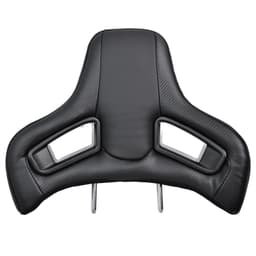
Sport Style Racing Seat Headrest
Premium quality with carbon texture panel
₦150,000
Shop Now →Car Neck Support FAQs
What is the best car neck support for long drives in Nigeria?
A plug-in detachable sport style racing headrest is the most effective car neck support for Nigerian conditions. Unlike strap-on pillows that compress and degrade, a proper replacement headrest maintains its shape and positioning year-round. It addresses the root cause (gap between head and headrest) rather than adding padding to a poorly positioned factory unit.
Will a car neck pillow from Jumia work for daily Lagos driving?
Short-term, yes. After 2–3 months in Lagos heat and daily use, most Jumia neck pillows have compressed significantly and lost their effectiveness. They're a low-cost solution that requires replacement every few months. For daily use over a full year, a proper plug-in headrest is more cost-effective.
Can neck pain from driving be fixed without changing the headrest?
Adjusting your factory headrest to the correct height (centre at skull level, not neck level) helps. Improving your seat position (slightly reclined, not bolt upright) helps. But if the headrest is too far from your head (which most factory units are), these adjustments reduce the problem rather than solve it. The underlying geometry requires a headrest that sits closer to your skull.
How much does a proper car neck support cost in Nigeria?
Budget strap-on cushions: ₦2,000–₦10,000. Quality mid-range sets: ₦10,000–₦20,000. Premium plug-in replacement headrest: ₦150,000. The premium option lasts significantly longer and provides genuine structural neck support rather than padding over a poor factory design.
Is there a difference between a car neck support and a racing headrest?
They serve the same function, supporting your head and neck during driving, but through different mechanisms. A car neck support is typically a cushion added to your existing headrest. A racing headrest is a full replacement that sits in the same mounting slots as your factory headrest, providing better structure, better positioning, and better durability.


You might also like

Get car upgrade tips in your inbox
Join car enthusiasts across Nigeria who get our best tips delivered weekly.
We respect your privacy. Unsubscribe anytime.