ECU Tuning in Lagos Nigeria: Stage 1 Guide for Toyota, Lexus, and Mercedes Owners

Mohammed Lexus
Published 30 May 2026
Your car's engine is deliberately limited. Not because the engineers could not get more out of it, but because they had to sell the same vehicle across dozens of markets with different fuel grades, emissions standards, and insurance categories. ECU tuning removes those generic restrictions and calibrates the engine specifically for your car, your fuel, and how you actually drive.
If you have ever felt that your Toyota Camry hesitates before it pulls, that your Lexus IS350 is slower than it should be for a 3.5-litre V6, or that your Mercedes always feels one gear short on the expressway, you are not imagining things. That sensation is the factory tune doing what it was designed to do. A Stage 1 ECU remap at Mohammed Lexus changes that.
What Is ECU Tuning?
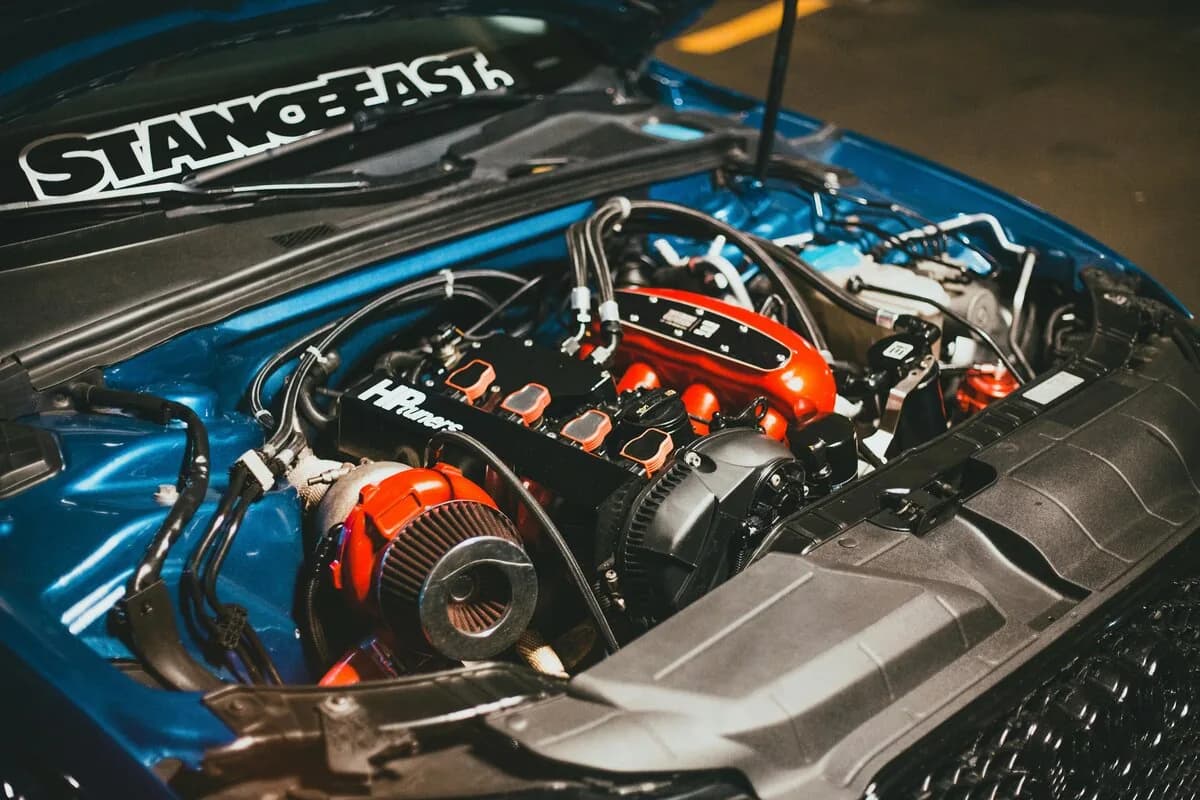
The ECU, or Engine Control Unit, is the computer that governs how your engine runs. It controls fuel injection timing, the air-fuel mixture at every load point, ignition timing, boost pressure on turbocharged engines, and the throttle response map that determines how aggressively your engine reacts to pedal input. Every parameter is controlled by a software map written by the manufacturer.
Factory ECU maps are conservative by design. They account for the worst-case fuel quality in every country the car is sold in, the most cautious maintenance interval assumptions, and the manufacturer's liability exposure across a hundred different markets. A Toyota sold in Nigeria, Germany, Japan, and Australia runs the same base ECU map, calibrated for the lowest common denominator across all of them.
ECU tuning, also called remapping or chip tuning, replaces those factory settings with an optimised map calibrated specifically for your car. The calibration accounts for your engine's actual condition, the fuel grade available in Nigeria, and the way performance cars are actually driven on routes like the Lekki-Epe Expressway or Third Mainland Bridge. The result is an engine that operates the way it was physically capable of operating all along.
Stage 1 tuning is software only: no hardware changes, no parts to order, no physical modifications to the engine. A technician connects to the OBD-II port, reads the current map, writes the new calibrated map, and you drive away. It is the safest and most accessible level of tuning, and for most daily drivers in Lagos, it is the only level they will ever need.
Stage 1 vs Stage 2 vs Stage 3: What Is the Difference?
Understanding the stages helps you make an informed decision about what is appropriate for your car and how you use it.
| Stage | What It Involves | Power Gain | Hardware Changes? |
|---|---|---|---|
| Stage 1 | Software remap only | 10–35% | None |
| Stage 2 | Remap + supporting mods (intake, exhaust, intercooler) | 25–50% | Yes, bolt-on hardware |
| Stage 3 | Full build: forged internals, bigger turbo, custom tune | 50%+ | Yes, significant engine work |
Mohammed Lexus focuses on Stage 1 for daily drivers. Stage 1 is safe, reversible, and requires no physical changes to the car. For the overwhelming majority of Nigerian car owners who want better throttle response, stronger mid-range pull, and improved highway performance without turning their daily driver into a project car, Stage 1 delivers everything they are looking for.
Stage 2 and Stage 3 are for dedicated performance builds. They require planning, additional parts sourcing, longer lead times, and a different conversation about how the car will be used day to day. If you want to go that route, Mohammed Lexus can discuss what is involved. For now, this guide is focused entirely on Stage 1.
How Much Power Will You Gain?
The honest answer is: it depends on the engine. Turbocharged engines respond more dramatically to a remap because boost pressure can be safely increased in software. Naturally aspirated engines gain less in raw horsepower numbers but typically show significant improvements in throttle response and mid-range torque delivery, which is what you actually feel when driving.
Here are realistic estimates for the three cars Mohammed Lexus tunes most frequently in Lagos.
Toyota Camry 2.5L (2018 onwards, A25A-FKS engine)
Stock output is 203 hp and 252 Nm of torque. After a Stage 1 remap, expect approximately 220 to 230 hp and 275 to 290 Nm. The raw numbers are not dramatic, but the character of the engine changes noticeably. The Camry no longer feels sluggish from standstill on Ozumba Mbadiwe or when joining the Lekki-Epe Expressway. Throttle response becomes more direct, the car builds speed more naturally, and highway merging becomes significantly more confident. For one of the most popular cars in Nigeria, the transformation is meaningful.
Lexus IS350 3.5L V6 (2GR-FSE and 2GR-FKS engines)
Stock output is 306 hp and 380 Nm. After a Stage 1 remap, expect approximately 330 to 340 hp and 400 to 415 Nm. The IS350 already has strong low-end torque, and the remap sharpens the mid-range where most real-world overtaking happens. Throttle response becomes more direct: there is less perceived lag between pedal input and power delivery, which makes the car feel more alive in everyday use. The IS350 is already a performance-oriented vehicle; the tune gives it the precision the factory map deliberately blunted.
Mercedes-Benz C43 AMG and CLA 250 (turbocharged M276 and M270 engines)
Turbocharged engines respond best to remapping, and the Mercedes four-cylinder and V6 turbo family are among the most remap-friendly engines available. The stock CLA 250 makes 211 hp; after Stage 1, expect approximately 240 to 255 hp. The stock C43 AMG makes 362 hp; after Stage 1, expect approximately 395 to 415 hp. The improvement drivers notice first is turbo response: the lag before boost builds reduces significantly, and the car feels like it has a shorter pause between intention and acceleration. On a car like the C43, that change is substantial.
What About Fuel Efficiency?
This is the question most Lagos drivers ask first, and the answer is more positive than people expect. A well-optimised ECU remap often improves fuel economy during light, everyday driving. The factory map runs the engine rich at partial throttle because it has to account for every possible variation in fuel quality across all its target markets. That excess richness is fuel being burned without contributing to performance or efficiency.
A properly calibrated remap uses fuel more precisely: the engine produces the same power output at cruise with less waste. Drivers who remap a Toyota Camry and then drive it conservatively frequently report that fuel consumption stays the same or improves slightly at motorway speeds. The efficiency gain is most apparent on longer highway runs, like Lagos to Ibadan, where the engine spends extended time at a steady cruise rather than constantly accelerating and braking.
At full throttle, fuel consumption increases because the engine is producing more power. But full throttle represents a small fraction of typical Lagos driving. The net effect across a normal week of driving is neutral to slightly positive on fuel costs.
What Does ECU Tuning Feel Like After?
The change in throttle response is the first thing every driver notices on the post-tune drive. Pressing the accelerator feels more directly connected to what the engine does. There is less of the slack or pause that factory tunes build in between pedal and engine response.
The car pulls harder from lower revs. On engines like the Lexus IS350 where the low end was already strong, the improvement is most pronounced in the mid-range from 2,500 to 5,000 rpm where the engine now holds the power band longer. Better low-end torque means you spend less time forcing gear changes to maintain speed in slow-moving traffic.
Highway overtaking becomes effortless. At 100 to 120 km/h, a factory-tuned engine often has to drop two gears to overtake confidently. After a Stage 1 remap, the engine has the reserve to accelerate from that speed in the same gear. On the Lagos-Ibadan Expressway, that change matters.
In everyday Lagos traffic, nothing is different. The tune only activates when you request performance. Idle quality, low-speed smoothness, and air conditioning response are unchanged.
Before booking an ECU tune, have your car scanned for existing fault codes. Any underlying mechanical issue, such as worn spark plugs, boost leaks on turbo cars, or dirty injectors, will not be fixed by a remap and can produce incorrect results. Mohammed Lexus includes a full diagnostic scan before every tune.
What Cars Are Suitable for a Stage 1 ECU Tune?
Best Candidates for a Stage 1 Tune in Nigeria
Turbocharged petrol engines respond most dramatically to a Stage 1 remap. This includes the full Mercedes C-Class, GLC, and GLE range running the M270 and M276 engines. BMW 3-Series and 5-Series models on the B58 and N55 turbocharged sixes are excellent candidates. The Volkswagen Golf GTI and Audi A4 on the EA888 engine are among the most well-documented remap platforms available.
Naturally aspirated performance engines are also strong candidates when the goal is improved throttle response and mid-range character. The Lexus IS350 and GS350 on the 2GR family, the Toyota Camry on the 2018-onwards A25A-FKS, and the Lexus RC350 all respond well. Most modern engines from 2010 onwards have sufficient ECU access for a clean Stage 1 remap.
Cars That Are Not Good Stage 1 Candidates
Very high-mileage engines with worn piston rings, tired turbos, or struggling injectors are not good candidates. The principle is simple: tune a healthy engine. A remap slightly raises operating demands, so address any mechanical issues first before remapping.
Engines with active fault codes that indicate mechanical problems should be sorted before any remap work. A misfire code, boost pressure fault, or oxygen sensor fault means something is wrong in the base system. Remapping over an active fault can mask a worsening problem and will not produce the expected result.
The Process at Mohammed Lexus
Step 1: Pre-Tune Diagnostic
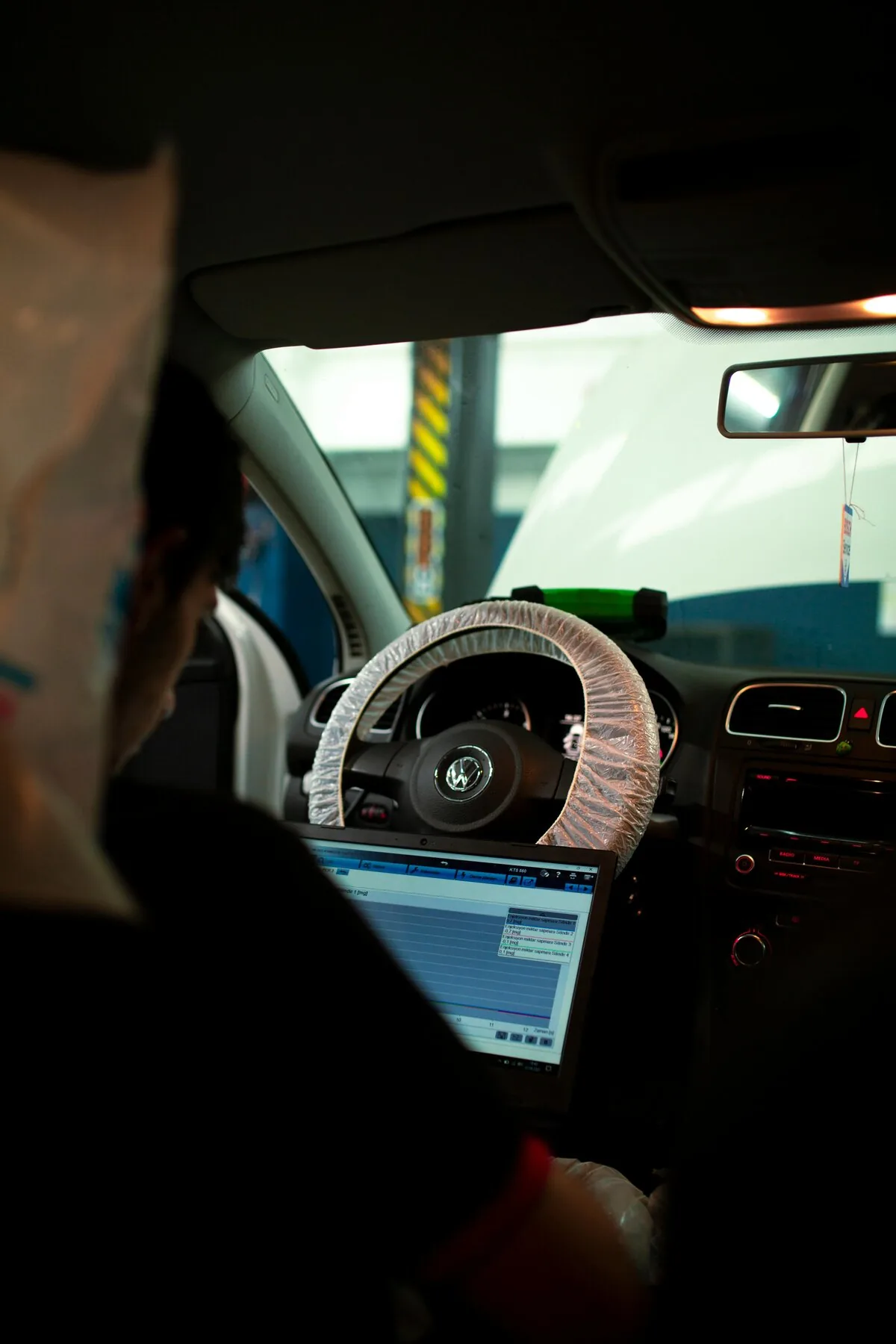
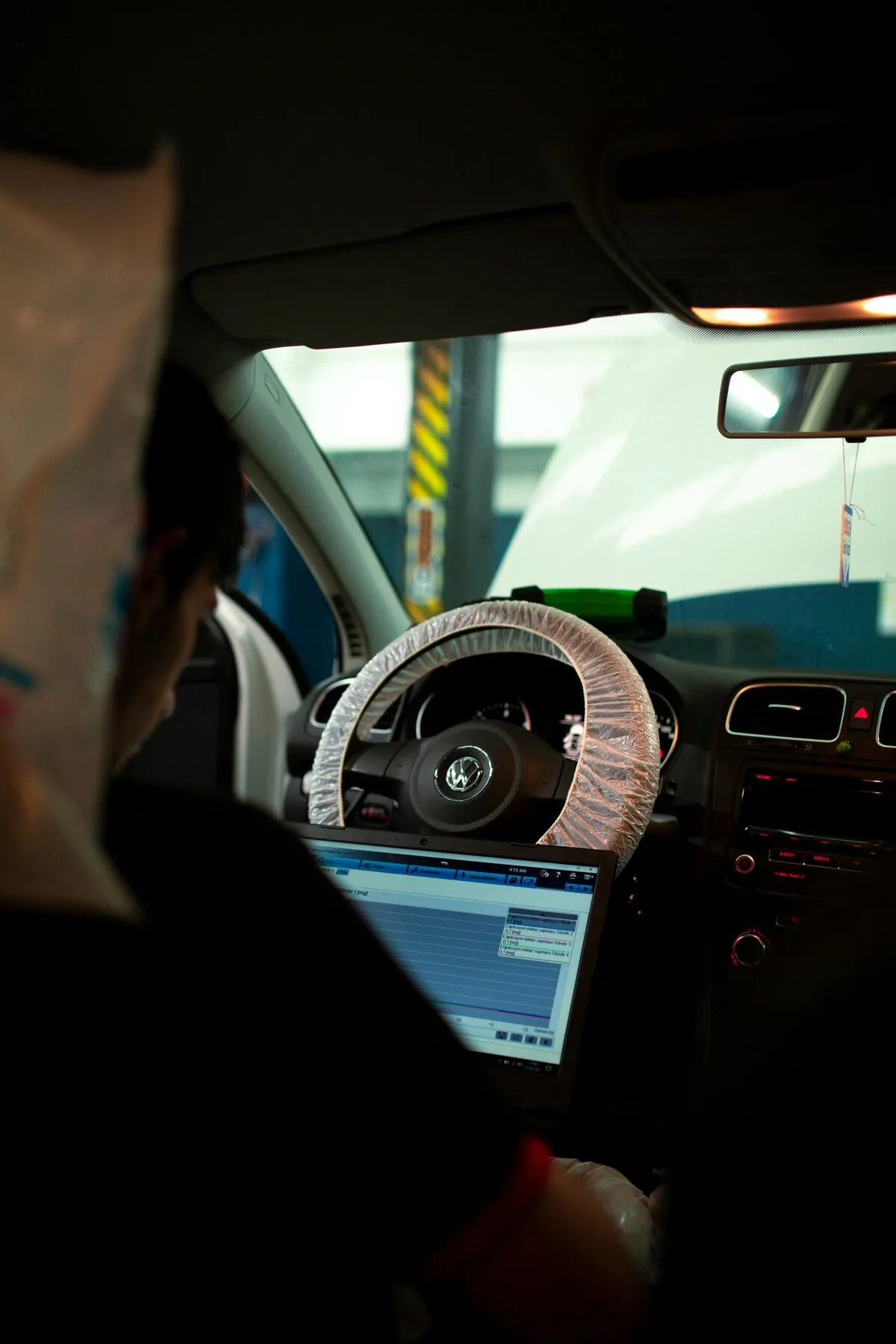
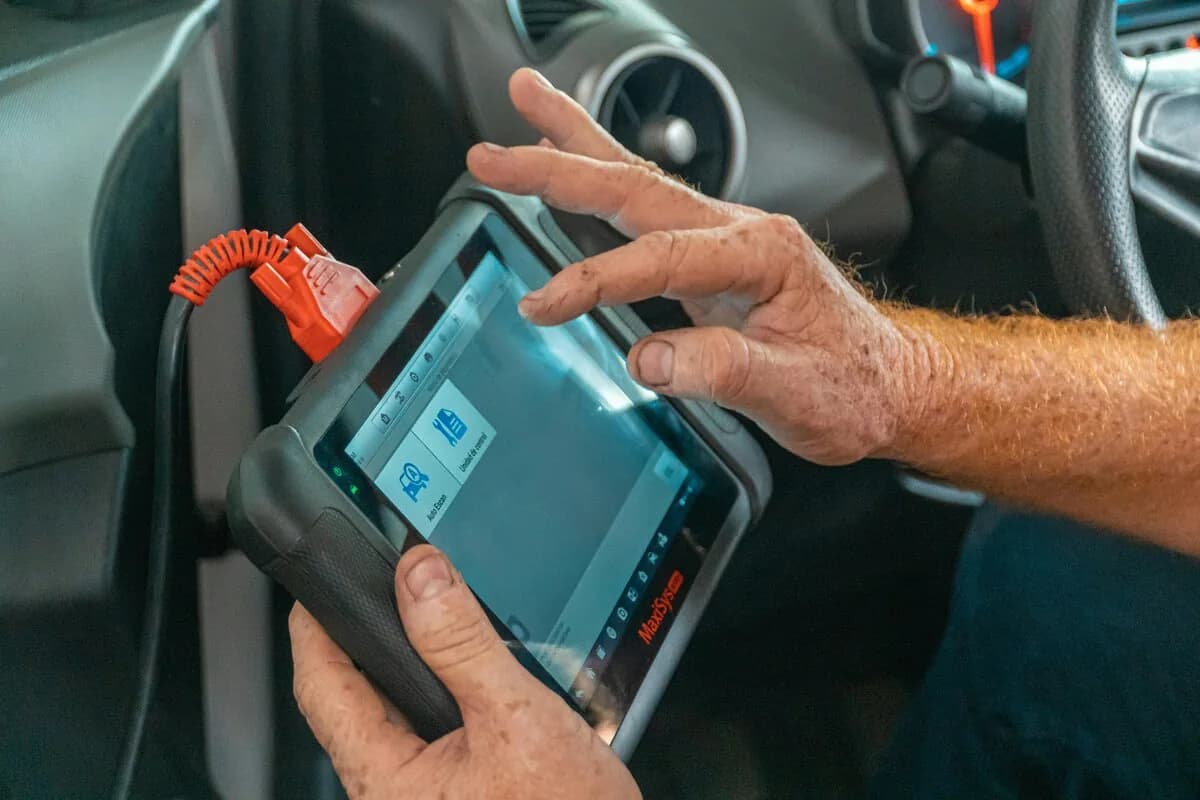
The car is plugged into a professional diagnostic scanner to check for any stored or active fault codes across the fuel system, ignition, boost control, and transmission. A test drive assesses baseline throttle response and gear change quality. Any issues found are discussed with the client before work proceeds. A car that arrives with a fault code for a worn coil pack or partially blocked injector will not tune correctly, so identifying these first protects both the result and the engine.
Step 2: The Remap
The OBD-II port is the connection point. The technician reads the current ECU map, and the new calibrated map is reviewed and written back to the ECU. The write process takes between 20 and 60 minutes depending on the vehicle. The car stays exactly as it was mechanically: no parts are removed, no hardware is changed. The calibrated map accounts for the fuel quality available in Nigeria, typical Lagos operating temperatures, and the performance headroom specific to that engine family.
Step 3: Post-Tune Drive
The car is road-tested immediately after the remap. Throttle response, boost behaviour on turbocharged cars, and transmission gear change quality are verified on the road. Any adjustments are made on the same day before the car is handed back. Mohammed Lexus encourages clients to join the post-tune drive when possible: experiencing the before and after on familiar Lagos roads makes the difference concrete.
ECU Tune Combined With a Car Wrap: The Complete Package
Mohammed Lexus is one of the few workshops in Lagos that can handle both exterior customisation and performance tuning under one roof. Many clients combine a wrap appointment with an ECU tune: new appearance on the outside, new performance on the inside, one workshop visit and one point of contact for both jobs.
The wrap changes how it looks. The tune changes how it drives. Together they represent a complete transformation of a car that goes beyond what either service achieves alone. A matte military green Lexus IS350 with a sharper throttle response and 330 hp is a different vehicle from what left the showroom, in every dimension that matters.
To complete the interior: the Sport Style Racing Seat Headrest at ₦150,000 is the motorsport cabin upgrade that pairs naturally with a performance-tuned car. The exterior is wrapped, the engine is remapped, the interior carries the visual signature of a car that is built for driving rather than just commuting. It is a coherent package.
Explore the full range of services, from vinyl wraps using 3M and Avery Dennison film to paint protection film, body kits, and ECU tuning, at Mohammed Lexus.
Is ECU Tuning Legal in Nigeria?
ECU tuning for personal use is not prohibited under Nigerian motoring law. The modification is software-based and invisible to any external inspection. It does not change the physical components of the vehicle, alter the VIN, or affect any registration document.
However, significantly increasing the output of a turbocharged engine may affect your vehicle insurance terms. Some insurers specify that modifications affecting performance must be declared. It is worth a brief conversation with your insurer before booking, particularly if you are tuning a vehicle that is already in a higher insurance bracket. The actual probability that an insurer will investigate an ECU map is low, but disclosure is the correct approach.
The ECU map change does not appear on any vehicle registration document and is not visible during FRSC or VIO roadside inspections. The car looks, sounds, and drives like a stock vehicle in light use. The difference only becomes apparent when you actually drive it.
How Much Does ECU Tuning Cost in Lagos?
Stage 1 ECU tuning cost at Mohammed Lexus depends on the vehicle make, model, and ECU architecture. The price reflects the complexity of accessing the ECU on that particular platform, the quality of the calibration being applied, and the time involved in the diagnostic, remap, and post-tune verification process.
For context, Stage 1 tuning in Lagos from a professional workshop typically ranges from ₦150,000 to ₦350,000 depending on the vehicle. Contact Mohammed Lexus directly for a specific quote on your car.
For reference on other services: full car wraps at Mohammed Lexus start from ₦1.4M for a sedan using 3M or Avery Dennison film, and from ₦1.6M for an SUV. Paint protection film starts from ₦2M. These services can be combined with an ECU tune in a single workshop visit.
Book Your ECU Tune at Mohammed Lexus
Mohammed Lexus is a premium car customisation workshop in Lagos, handling ECU tuning, vinyl wraps with 3M and Avery Dennison film, paint protection film, and body kits. Every job is done in-house on a schedule agreed with the client.
To book a consultation or get a quote for your car, visit mohammed-lexus.com/services. If you are combining a tune with a wrap or other service, let the team know upfront so the work is sequenced efficiently.
For the interior, the Sport Style Racing Seat Headrest at ₦150,000 is available now from the Mohammed Lexus store.

Sport Style Racing Seat Headrest
Premium quality with carbon texture panel
₦150,000
Shop Now →

You might also like


Get car upgrade tips in your inbox
Join car enthusiasts across Nigeria who get our best tips delivered weekly.
We respect your privacy. Unsubscribe anytime.