Two-Tone Car Wrap Nigeria: How It Works, Best Combinations, and What It Costs (2026)

Mohammed Lexus
Published 30 May 2026
A single-colour wrap changes how your car looks. A two-tone wrap changes what your car says about you. The deliberate split between two finishes creates tension, hierarchy, and intention: it looks designed, not just recoloured. And in 2026, two-tone wraps are among the most searched car customisation topics on Nigerian social media.
The concept is straightforward but the execution demands precision. Two colours need to land in exactly the right place on the body, follow the natural character of the panels, and read as one coherent idea from any angle. When it works, the result looks like it came from the factory. When it is done poorly, the split line tells on itself immediately.
Mohammed Lexus has completed two-tone wraps on vehicles ranging from daily drivers to exotic SUVs. Two of the clearest examples in the workshop's portfolio are a Mercedes-Benz G-Wagon AMG and a Lexus RX350.
What Is a Two-Tone Car Wrap?
A two-tone wrap applies two different colours, finishes, or both to different sections of a car, separated by a deliberate design line. The split can run horizontally across the body, follow a diagonal cut across the bonnet and doors, or run along the car's natural character lines panel by panel.
Each section can also carry a different finish. Matte grey on the upper body with gloss black below creates contrast in both colour and texture simultaneously. That layering is what separates a well-executed two-tone from a simple colour change.
The design line is created during installation. The first colour is applied, trimmed precisely along the target line, and sealed. The second colour is applied to its section, butted against the trim line, and sealed. The quality of that seam is what defines the result: a clean seam reads as a design decision, a rough one reads as a mistake.
The Mercedes G-Wagon Two-Tone: Mohammed Lexus Case Study
The Brief
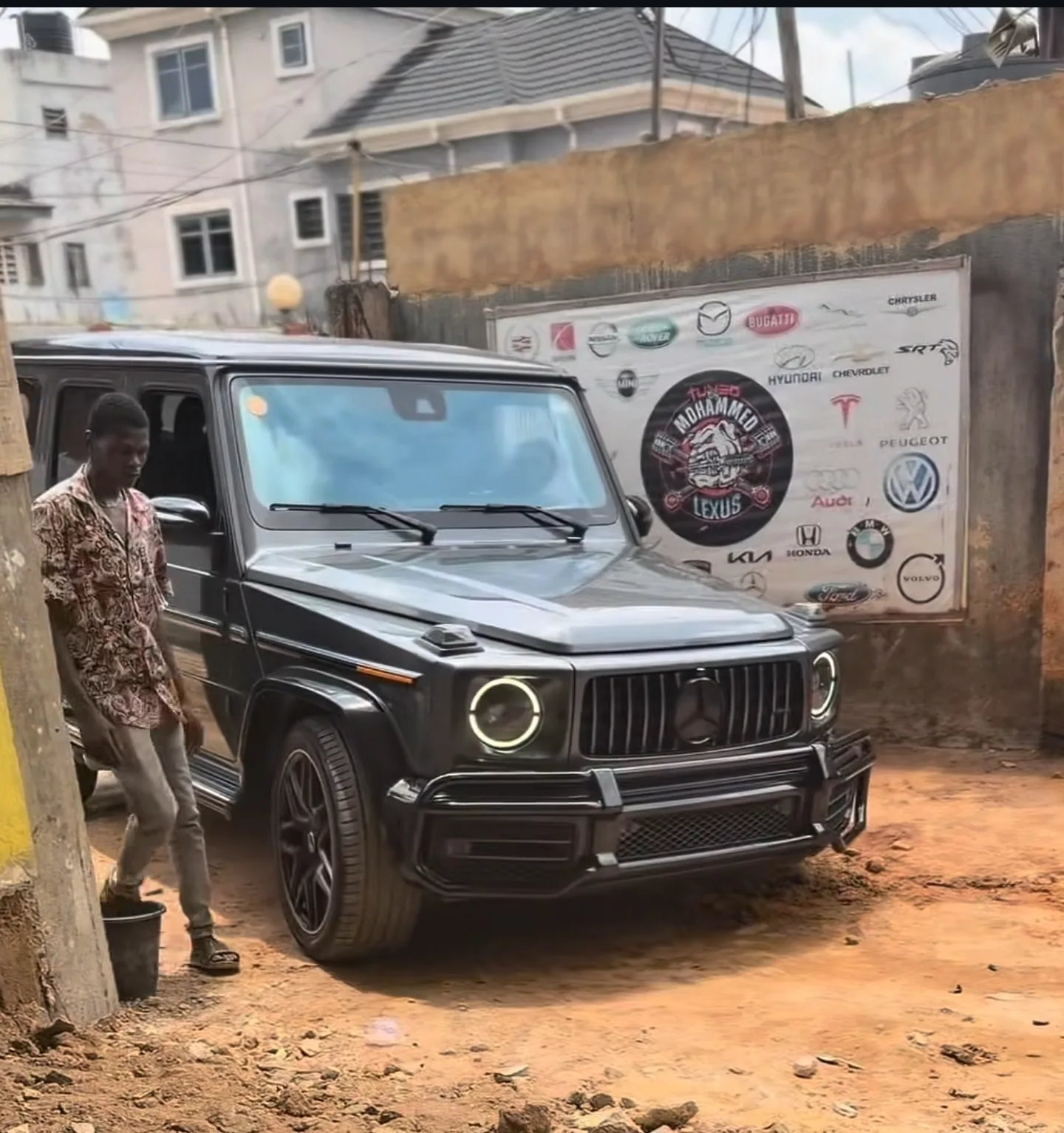
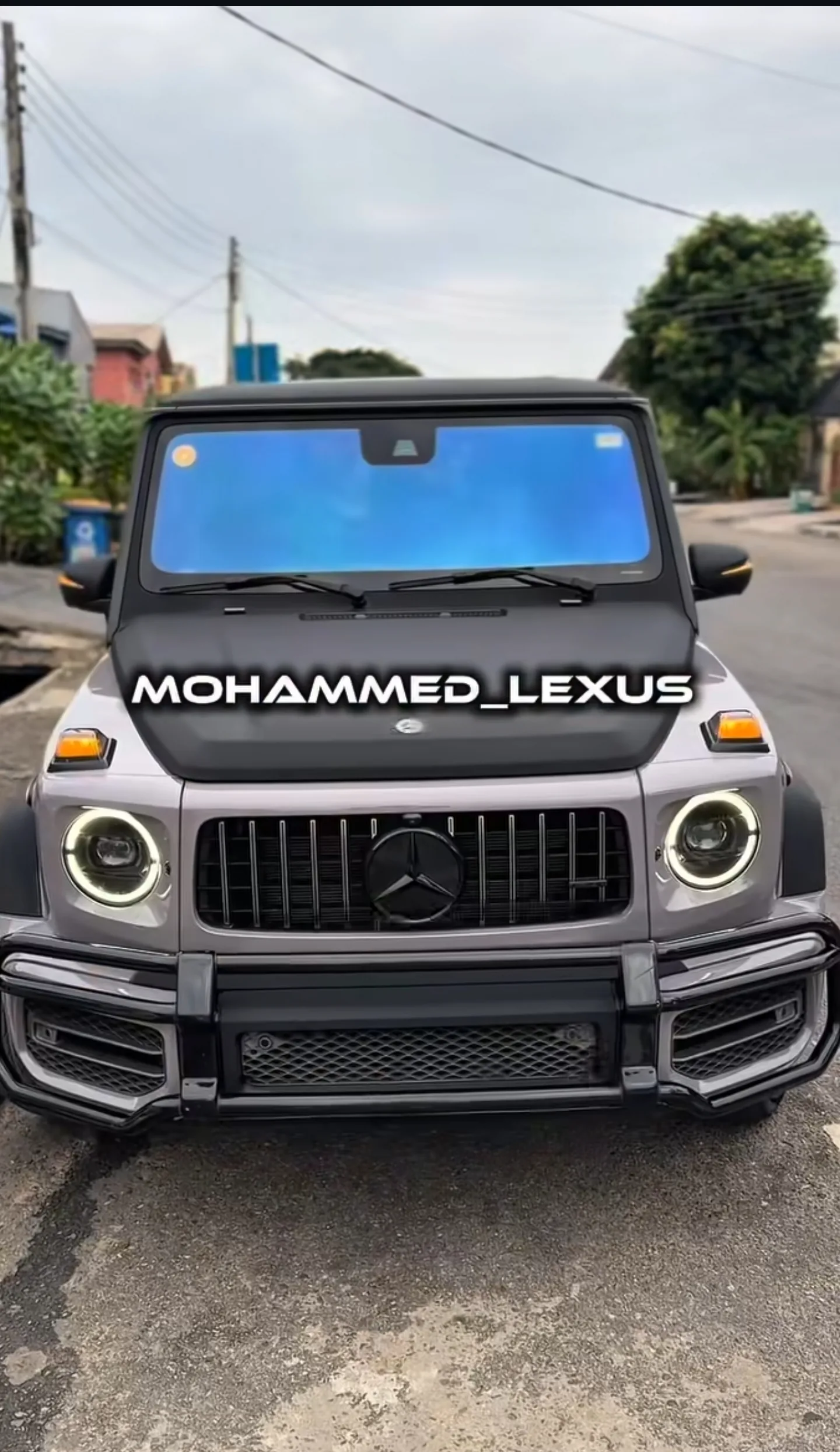
The G-Wagon AMG arrived at Mohammed Lexus for a full transformation. The client wanted two finishes working together: matte grey for the main body panels and roof area, and matte black for the lower sections, door sills, and bumpers. The contrast was intentional and specific. Not dark grey over light grey, but a clear tonal separation between the two zones.
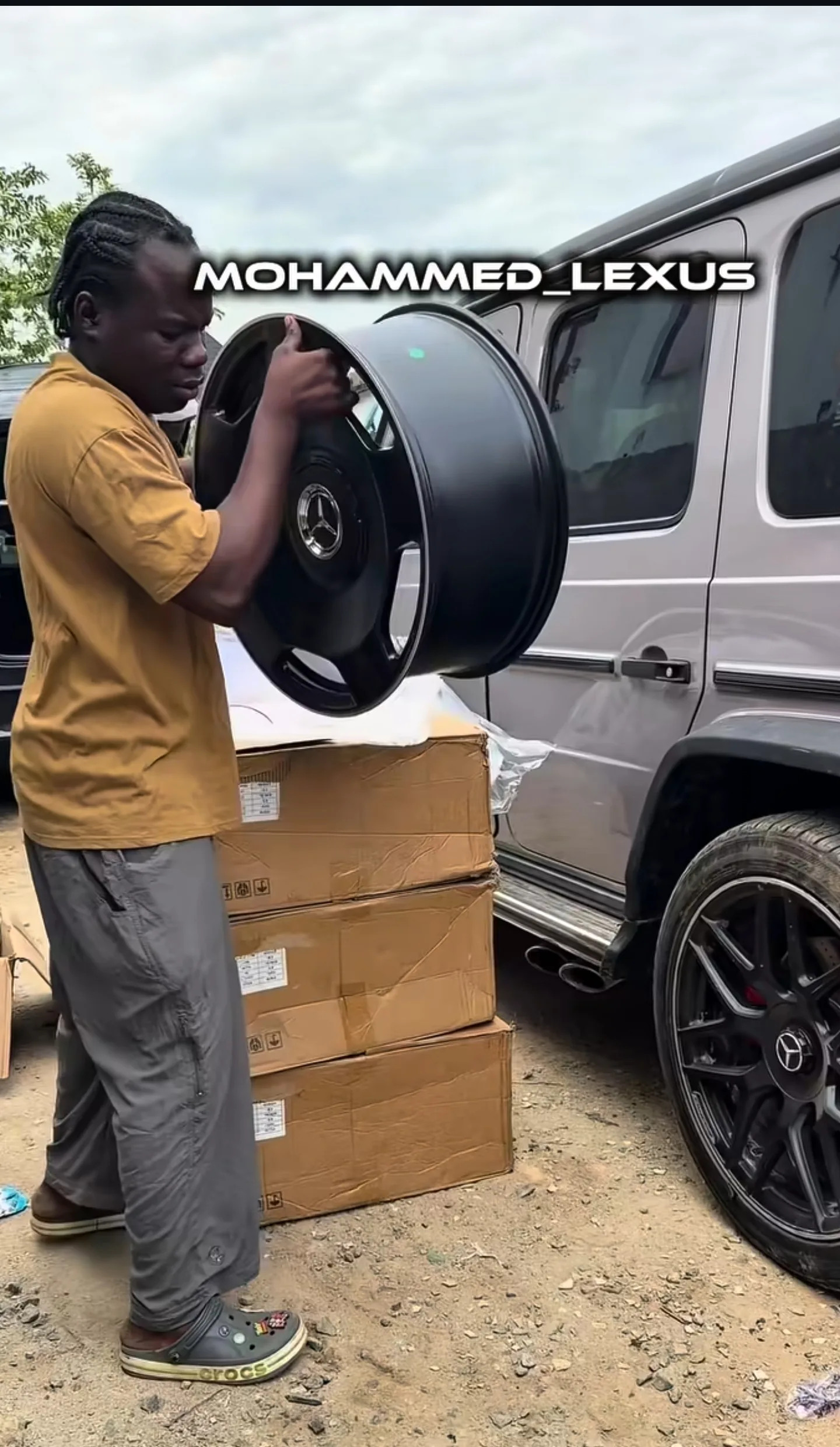
Additional work was scheduled alongside the wrap: badge removal for a clean wrap surface without the vinyl wrapping around raised badge edges, and new AMG wheels installed at the same time. This kind of combined session is efficient because the car is already in the workshop and any one upgrade benefits from the visual context the others create.
The Installation
The G-Wagon's shape works in favour of a two-tone wrap. Its body is boxy by design, with clearly defined horizontal lines where panels transition from one zone to another. The door character line, the cladding boundary, and the bumper edges all give the installer natural reference points for placing the split.
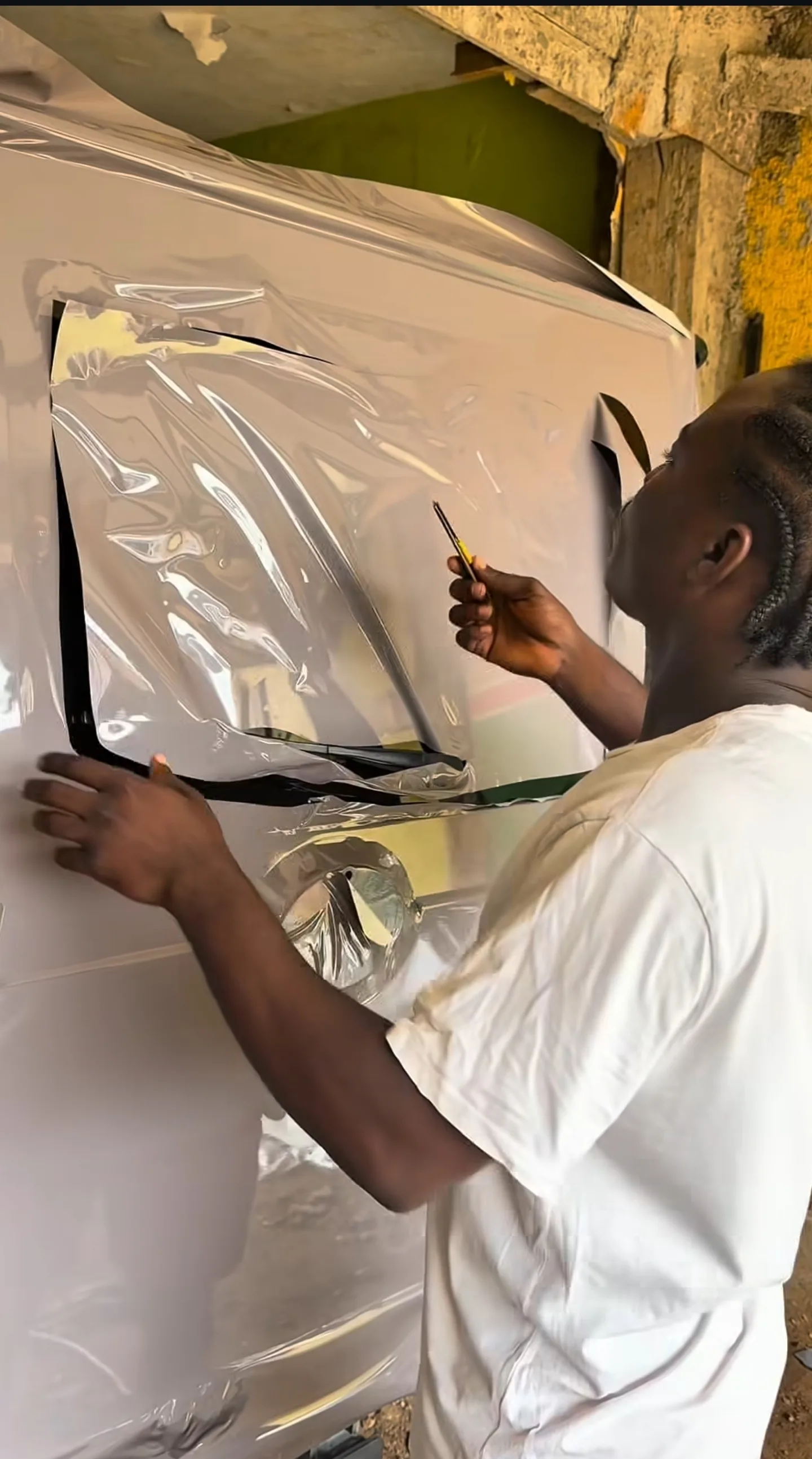
The matte grey film went on first, covering the upper body panels, doors, roof, and bonnet. The trim line was set along the door's lower character line, where the flat panel meets the lower cladding section, giving the grey its natural upper boundary. Wrapping around that line and sealing it cleanly is the critical step that determines whether the finished result looks intentional or improvised.
The matte black film followed on the lower panels, bumpers, door sills, and lower door sections. The badge removal done before installation meant every surface the film needed to cover was flat and unobstructed. Wrapping over a raised badge creates a weak edge where the vinyl bridges rather than bonds, and those edges lift earlier. Removing the badge first eliminates the problem entirely.
The Completed Result
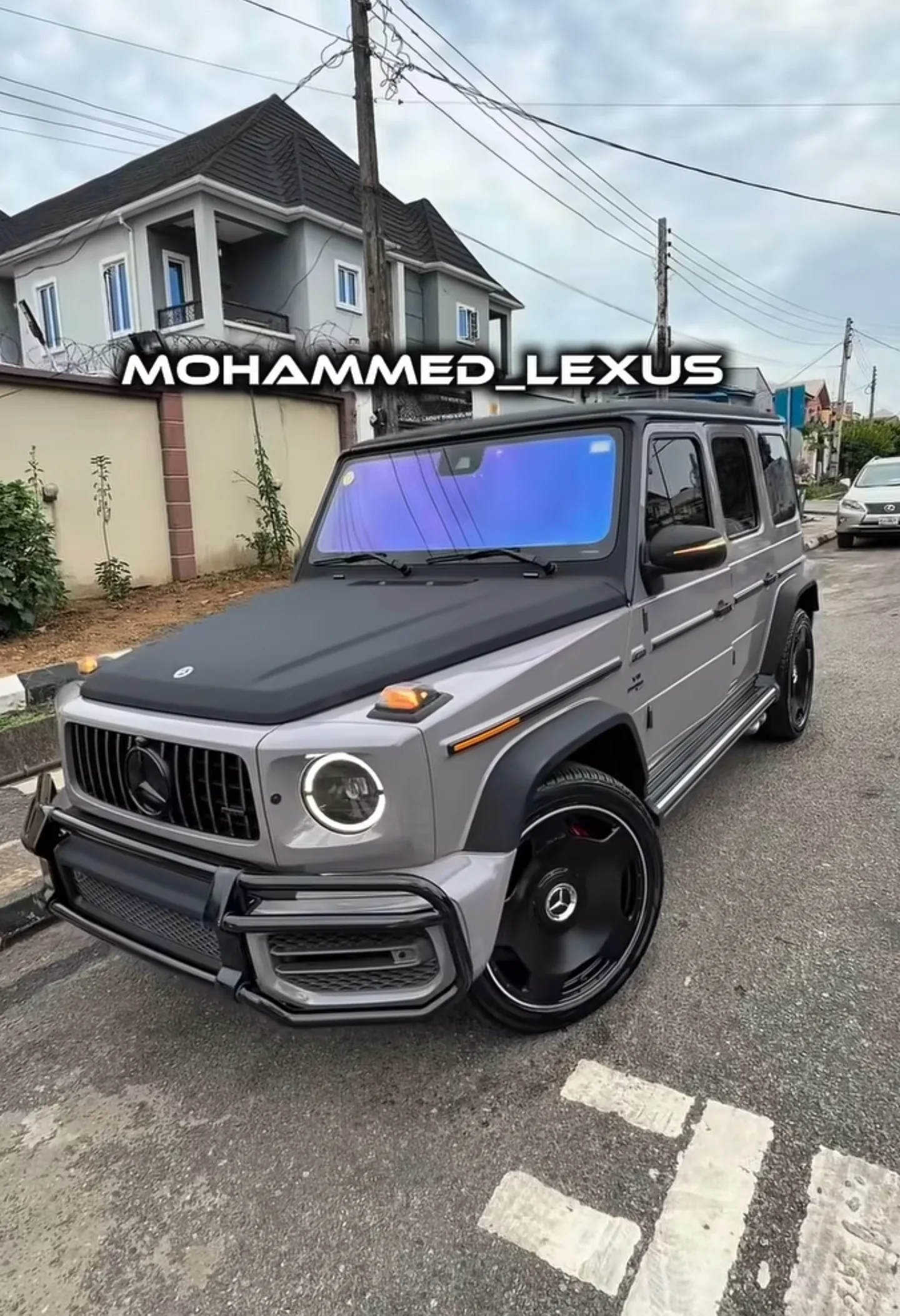
From the front, the split reads as if it was engineered into the G-Wagon's design brief. The matte grey body sits above a matte black lower section, the line between them following the door's natural break point exactly where the eye expects it to be. The two finishes are both matte, so the contrast is purely tonal: the grey reads as the dominant colour, the black as the grounding element below it.
The new AMG wheels in gloss black tie the lower dark section to the wheel arches, completing the composition from ground up. A car's wheel colour and the lower body colour working in the same register is the kind of detail that reads subconsciously: you do not necessarily identify it consciously, but the car feels finished rather than assembled.
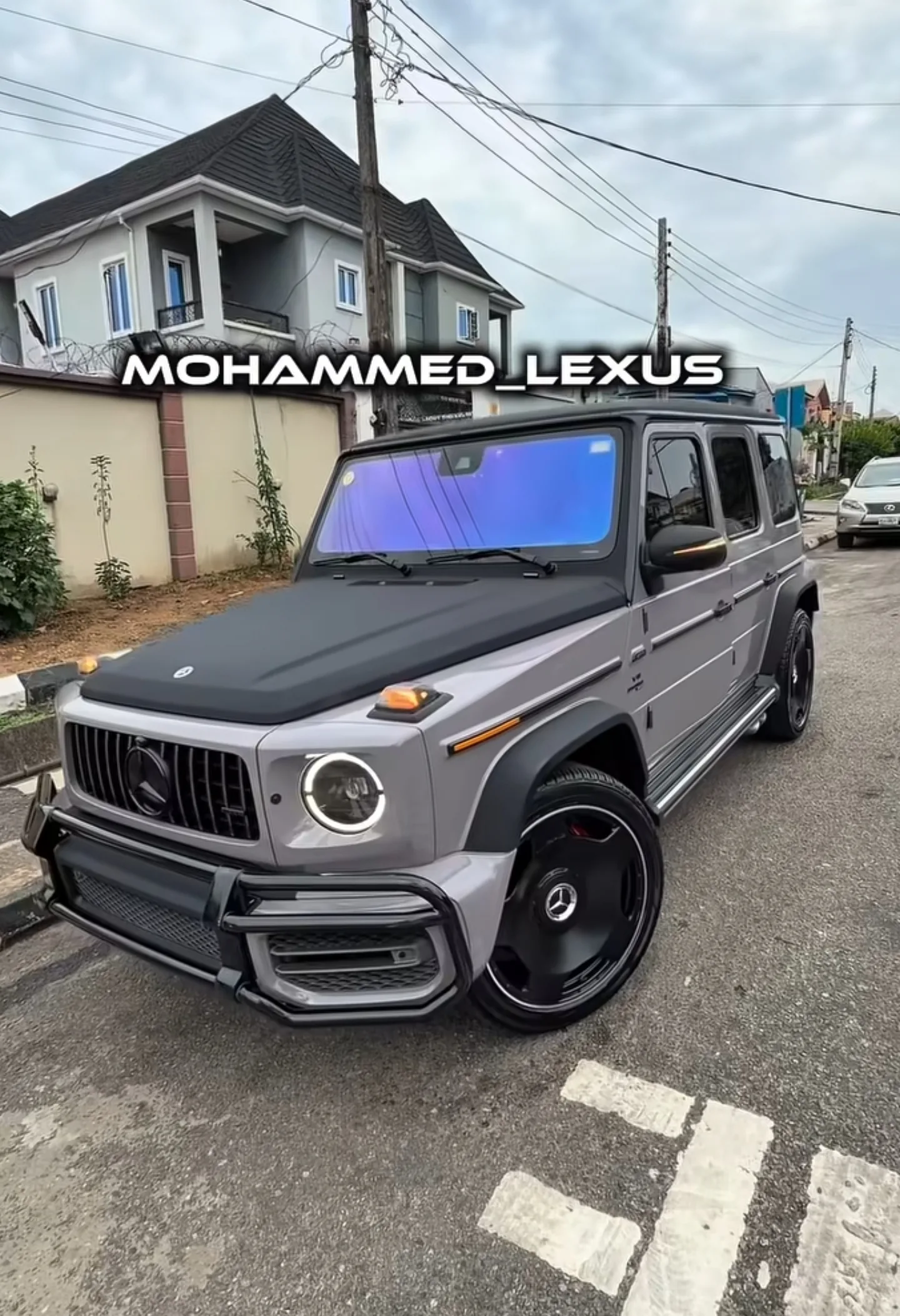
The halo headlight upgrade on this specific car added a further custom element that sits in the grey zone, framing the front face of the G-Wagon with a detail that complements the new two-tone appearance without competing against it.
The Lexus RX350 Two-Tone: One of Mohammed Lexus's Most Viral Wraps
The RX350 project became one of Mohammed Lexus's most shared pieces of content after the completed transformation appeared online. The design used two custom colours split along the RX350's natural body crease, the sweeping side line that runs from the headlights through to the taillights. This is the ideal placement for a two-tone split on the RX350 because the body crease already divides the car's flanks into two distinct visual zones. The wrap does not create the split: it follows a line the designer already put there.
The RX350's wide SUV flanks respond well to two-tone treatment because there is enough surface area for both colours to have genuine presence. On smaller cars, one colour can feel squeezed. On the RX350, each zone has room to breathe and the result reads as custom-built. The workshop's reading of where the split should fall, and which colours to pair against each other, is what turned a good idea into a viral result.
How the Design Split Is Decided
Following the Body Lines
Every car has natural character lines pressed into its body panels: swage lines, shoulder lines, belt lines, cladding boundaries. These lines exist to give the body visual structure and aerodynamic flow. They also happen to be the most logical places to split two colours, because following a body line makes the split look engineered rather than arbitrary.
On the G-Wagon, the split follows the clear horizontal boundary where the flat door panel meets the lower plastic cladding. On the RX350, it follows the sweeping side crease running end to end. Both decisions leverage lines that already exist, so the two-tone reads as a factory design intention even when it is a custom installation.
Ignoring the body lines and placing the split at an arbitrary height creates a different result: one that looks like a measurement was taken and a line was cut rather than a design decision being made. The difference is visible immediately to anyone who has looked at a well-designed car.
Roof vs Body Split
One of the most popular approaches: roof, mirrors, and pillars in a contrasting colour to the body. This creates a visual effect similar to a panoramic sunroof even on cars without one. The dark roof section lowers the perceived roofline, making the car look lower and wider. It works especially well on SUVs and crossovers with distinct roof sections.
This approach is forgiving because the roof-to-pillar boundary is a hard edge on every car. There is no ambiguity about where the first colour ends. The trim line falls into the body's existing geometry automatically.
Front and Rear Split
Less common but visually dramatic: front half of the car in one colour, rear half in another, with the split line at the B-pillar. This approach requires the most precise measurement and masking of any two-tone technique because the split line runs across vertical door panels where any deviation from level is immediately obvious. It is not the approach for a first two-tone experiment, but when it is executed cleanly it produces some of the most striking results available.
If you are not sure where the design split should fall on your specific car, bring it in to Mohammed Lexus for a consultation. The team can physically mark the car with tape and show you how the split will look before any vinyl is cut.
Best Two-Tone Colour Combinations in Nigeria (2026)
Not every colour pairing works as a two-tone split. Some combinations create visual confusion rather than contrast. These are the combinations that consistently land well on Nigerian roads and in Lagos conditions.
| Combination | Effect | Best for |
|---|---|---|
| Matte grey + matte black | Sophisticated, understated | SUVs: GLE, LX570, Prado, G-Wagon |
| Matte white + gloss black | Clean, high contrast | Sedans: Camry, IS350, C-Class |
| Satin gold + matte black | Premium, aggressive | Any car: high-end statement |
| Matte black + chrome silver | Bold, street performance | Sports cars: Mustang, Camaro |
| Custom colour + matte black lower | Any palette, grounded look | All vehicle types |
The unifying logic across all five: one colour is dominant and the other is subordinate. The most common error in two-tone design is choosing two colours that compete for equal attention. Pick a dominant and a supporting colour, and the design immediately has direction.
Matte black as a lower or accent element works across almost any primary colour because it grounds the car visually. Any colour floating above a matte black base reads as intentional, anchored to the road rather than floating above it.
What Does a Two-Tone Wrap Cost in Nigeria?
A two-tone wrap costs more than a single-colour wrap of the same vehicle. The additional cost reflects the design planning, the extra precision required at the split line, more material handling, and the additional installation time. Expect to pay roughly 20 to 30 percent more than the equivalent single-colour job.
At Mohammed Lexus, two-tone sedan wraps using 3M or Avery Dennison film start around ₦1.6M to ₦2M. Two-tone SUV wraps start from ₦2M to ₦3M depending on vehicle size, panel complexity, and the specific finishes chosen. The full breakdown is in the car wrap cost guide for Nigeria.
Film brand matters more on a two-tone job than on a single-colour wrap. If one film fades faster than the other, the split line eventually becomes a contrast line for the wrong reason. Mohammed Lexus uses 3M and Avery Dennison throughout, so both sections age at the same rate.
Vehicles That Work Best for Two-Tone Wraps
The best two-tone candidates share one characteristic: defined body lines that give the split a natural home. Without a body line to reference, the split line has to be created from nothing, which is harder to execute and harder to read as intentional.
SUVs with clear body architecture are the strongest candidates. The Mercedes-Benz G-Wagon, GLE, and GLS all have horizontal body lines that define clear zones. The Lexus LX570 and RX350 have side creases that run the full length of the car. The Toyota Land Cruiser Prado and Range Rover Sport both have distinct upper and lower body sections. All of these work well.
Sports sedans with sharp character lines respond equally well. The Lexus IS350 has a defined hip line. The Mercedes-Benz C43 and C63 AMG have lines that divide the door panels clearly. The BMW M3 and M5 have shoulder lines that run from the front wheel arch rearward.
American muscle is underused in Nigeria for two-tone work. The Chevrolet Camaro, Dodge Charger, and Ford Mustang all carry body lines that handle two-tone naturally. Long, flat door panels make horizontal splits particularly clean on these cars.
Vehicles with heavily complex curves and no clear body line are more challenging. A design consultation at Mohammed Lexus before committing is the right move for any car in this category.
Can You Add Other Upgrades Alongside the Two-Tone?
Yes, and combining upgrades in a single workshop session is more efficient than running them separately. The car is already in the bay, panels are already prepared, and the visual context of one upgrade informs the others.
The most common combinations at Mohammed Lexus are two-tone wrap alongside new wheels, body kit, or ECU tune. The G-Wagon case study on this page is a clear example: the two-tone wrap, badge removal, and AMG wheel installation all happened in the same session, and the result is stronger for it.
The interior upgrade is worth considering at the same time. Once the exterior transformation is complete, the cabin needs to match the energy outside. The Sport Style Racing Seat Headrest at ₦150,000 with free Lagos delivery is the most direct interior upgrade that complements a freshly wrapped exterior. The design language of the headrest works alongside the performance intention of a custom wrap, and doing both at once means the car is finished, not halfway there.
Book Your Two-Tone Wrap at Mohammed Lexus
Every two-tone wrap starts with a design consultation: the car, the colour direction, and where the split line should fall. The right answer is specific to each vehicle, and the consultation is where that decision gets made properly.
Mohammed Lexus uses 3M and Avery Dennison film throughout, rated for Nigerian weather conditions and available in the full range of finishes for two-tone work. Clean removal is engineered into both film ranges so future changes do not affect the factory paint.
Schedule your free consultation at Mohammed Lexus and bring the car in for a direct assessment. The team will confirm the exact cost for your vehicle and finalise the colour split before any film is cut.
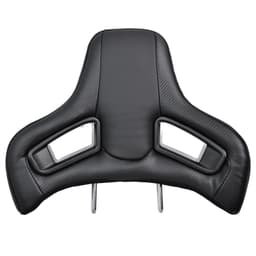
Sport Style Racing Seat Headrest
Premium quality with carbon texture panel
₦150,000
Shop Now →

You might also like
Custom Car Wrap Design in Lagos: How Mohammed Lexus Built Peller's One-of-One GLE
Read More →
How Much Does a Car Wrap Cost in Nigeria? (2026 Price Guide)
Read More →
Mercedes C43 Wrap Nigeria: Transformed from Dark Blue to Satin Aqua Green in Lagos
Read More →Get car upgrade tips in your inbox
Join car enthusiasts across Nigeria who get our best tips delivered weekly.
We respect your privacy. Unsubscribe anytime.