Why Mohammed Lexus Flew to China: The Story Behind Every Wrap We Do

Mohammed Lexus
Published 30 May 2026
The Question That Started Everything
"Why don't you just buy cheap vinyl?"
It is one of the most common questions Mohammed Lexus gets on WhatsApp. And it is a fair question. There is vinyl on the market in Lagos for a fraction of the price charged at a professional workshop. The rolls look similar. The colours match. The finish, at a glance, is convincing.
So what is actually different? The honest answer is not something you can see on a product listing or read on a supplier's invoice. Understanding the difference requires going to where the material is made. So Mohammed Lexus went.
The China Trip: Why Go to the Source?
Most of the world's vinyl film, including the raw material that goes into 3M and Avery Dennison rolls, is manufactured in China. This is not a secret. What is less widely understood is that there is an enormous range in quality within that manufacturing ecosystem. The same country, the same category of product, the same name on a box: the engineering inside can be completely different.
Understanding the difference between quality vinyl and cheap vinyl requires understanding how it is made, not just what it looks like on a roll in a Ladipo shop or arriving in a DHL package. The colour, the texture, even the weight of a cheap roll can seem comparable to a premium product at first handling. The differences reveal themselves under heat, under UV, under time and Lagos traffic.
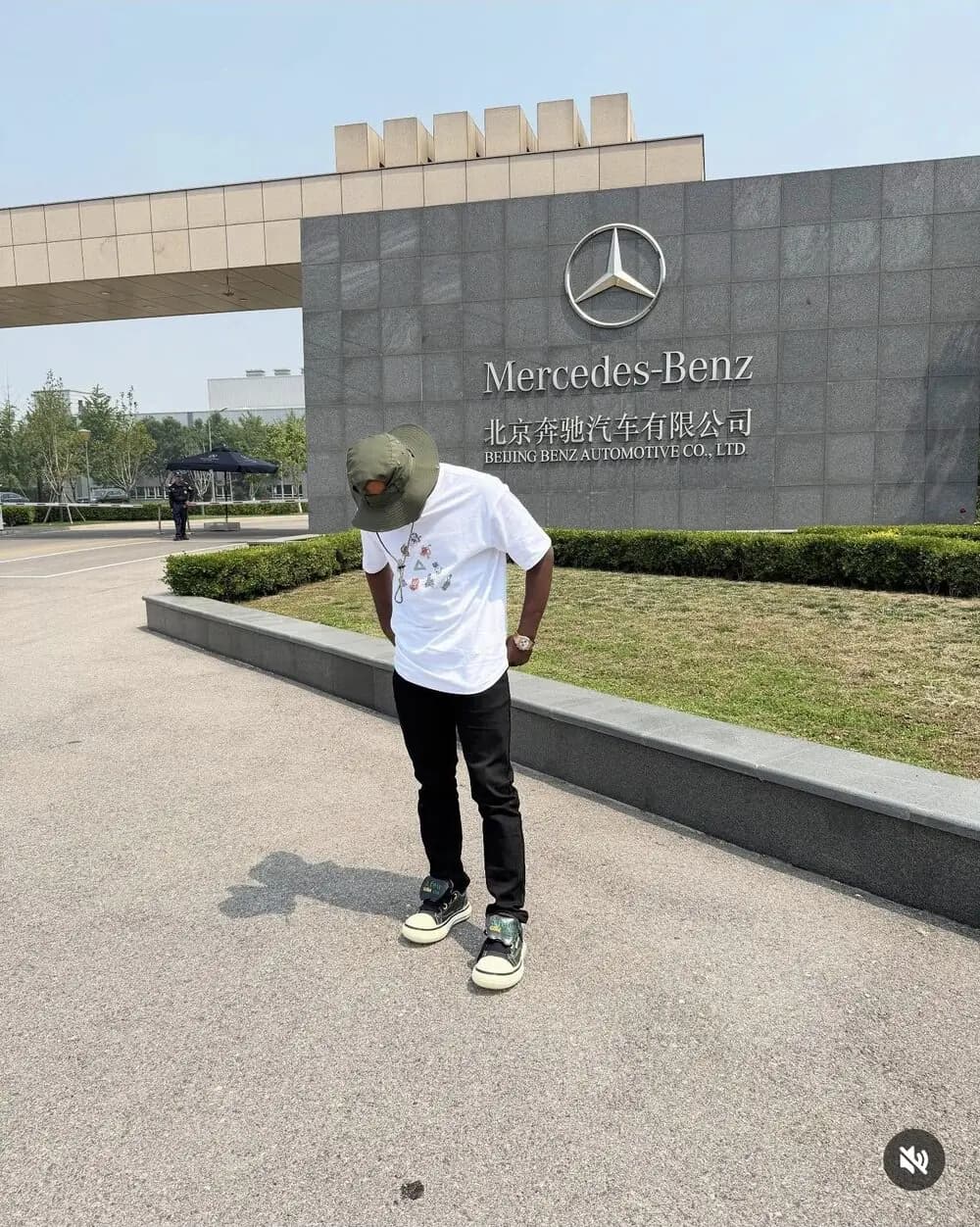
Mohammed Lexus flew to China to visit manufacturing facilities, meet supplier representatives, and see the production process from the inside. The trip was three significant stops: the Mercedes-Benz Beijing factory, a Tesla showroom, and a TOPCAR vinyl manufacturer. What he saw changed how he thinks about every roll of film that comes into the Mohammed Lexus workshop.
Stop 1: The Mercedes-Benz Beijing Factory
The Mercedes-Benz Beijing factory, officially 北京奔驰汽车有限公司, is one of the largest automotive manufacturing facilities in China. It produces vehicles for the Chinese market and for global export, operating at a scale that reflects exactly how seriously the automotive world takes surface quality.
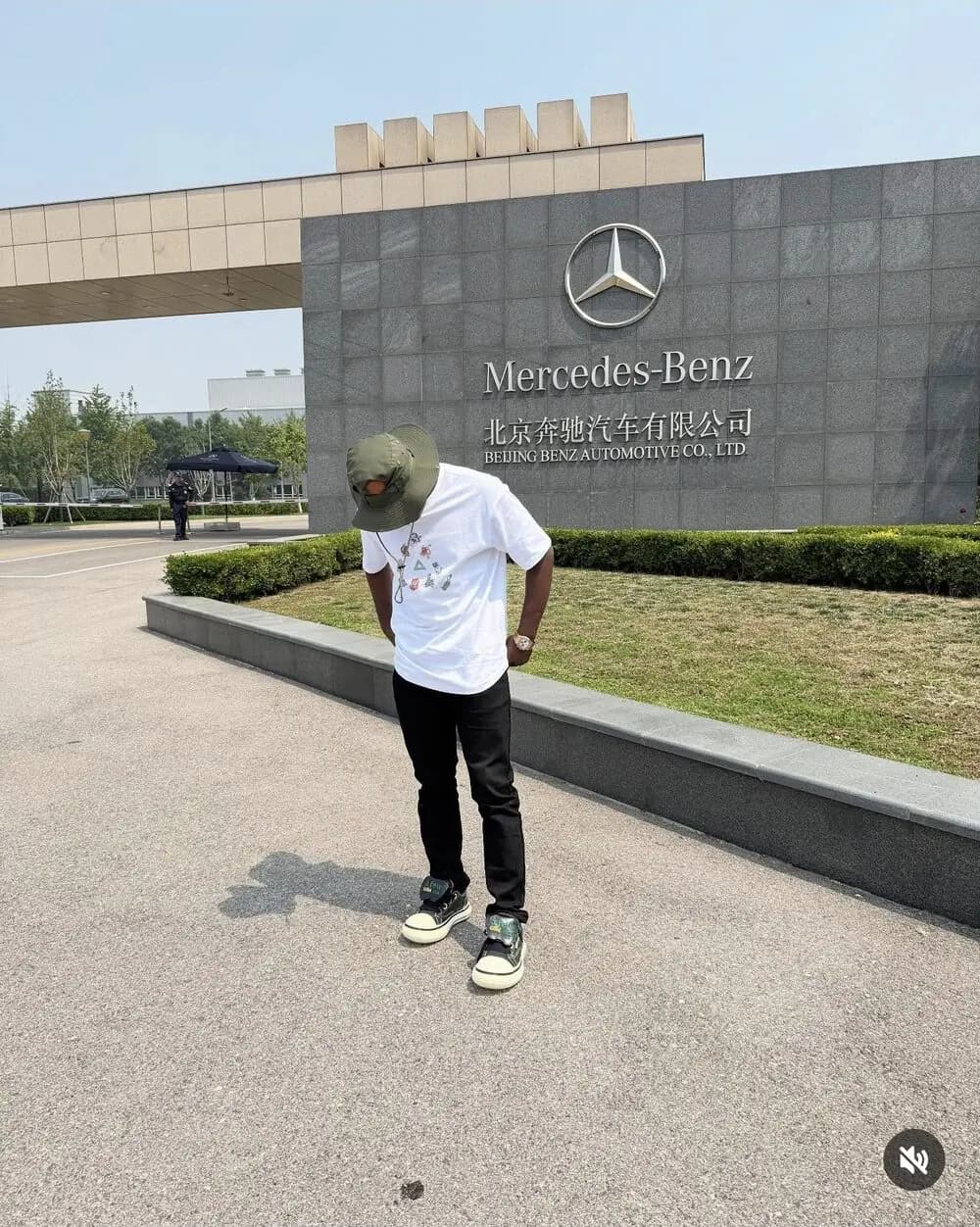
Visiting a factory like this was about context. How do the world's leading automotive brands approach materials, surface finishing, and quality control? What does the standard actually look like when it is set by a manufacturer whose reputation depends on every car looking flawless at delivery?
The paint finishing process at a factory of this calibre uses multiple coats applied in a precisely controlled environment: temperature, humidity, and particle filtration are all managed to tolerances measured in fractions of a degree and micrograms per cubic metre. The goal is a surface that lasts decades without fading, lifting, cracking, or oxidising. That level of engineering does not happen accidentally.
The lesson from this stop was not about the specific Mercedes-Benz product. It was about the mindset. Quality finishing is never accidental. It is engineered, tested, validated, and controlled at every stage. That same mindset is what Mohammed Lexus brings to every wrap installation in Lagos, and it starts with the film.
Stop 2: The Tesla Showroom
Tesla's manufacturing and retail operations in China represent a different kind of industry benchmark: modern, digitally-driven, and obsessive about surface quality in ways that align closely with what the wrap industry demands. Tesla has made surface perfection a brand pillar, partly because their vehicles are sold without dealership polish and presented directly to buyers as they come from the factory.
Visiting the Tesla showroom confirmed what Mohammed Lexus already knew from years of working on premium vehicles. Premium brands do not compromise on surface materials because surface defects are visible, brand-damaging, and expensive to correct after the fact. The standard is set before the car reaches the customer, not after.
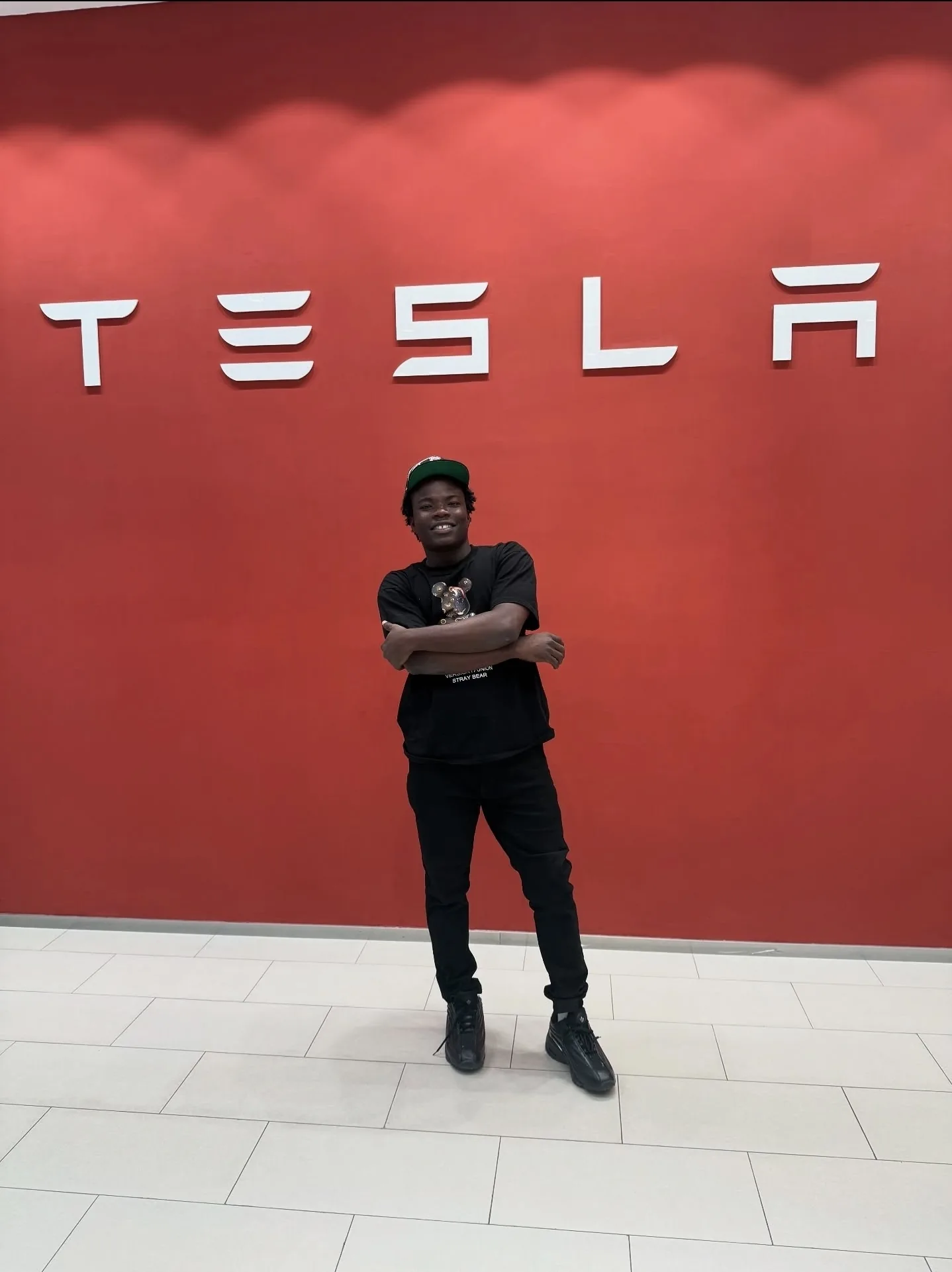
The context is important for Nigerian car owners. When you bring a vehicle to Mohammed Lexus for a wrap, the standard being applied to the surface of your car is the same standard these manufacturers apply at the factory. The film, the prep, the installation, and the finishing are all executed with the expectation that the result will look like it was designed that way, not like something applied in a car park.
Stop 3: The TOPCAR Vinyl Manufacturer
The most technically revealing stop on the trip was the meeting with a TOPCAR vinyl film manufacturer representative. This was not a showroom visit or a factory tour for guests. It was a working conversation over tea, with someone who manufactures vinyl film professionally and understands the material science behind it.
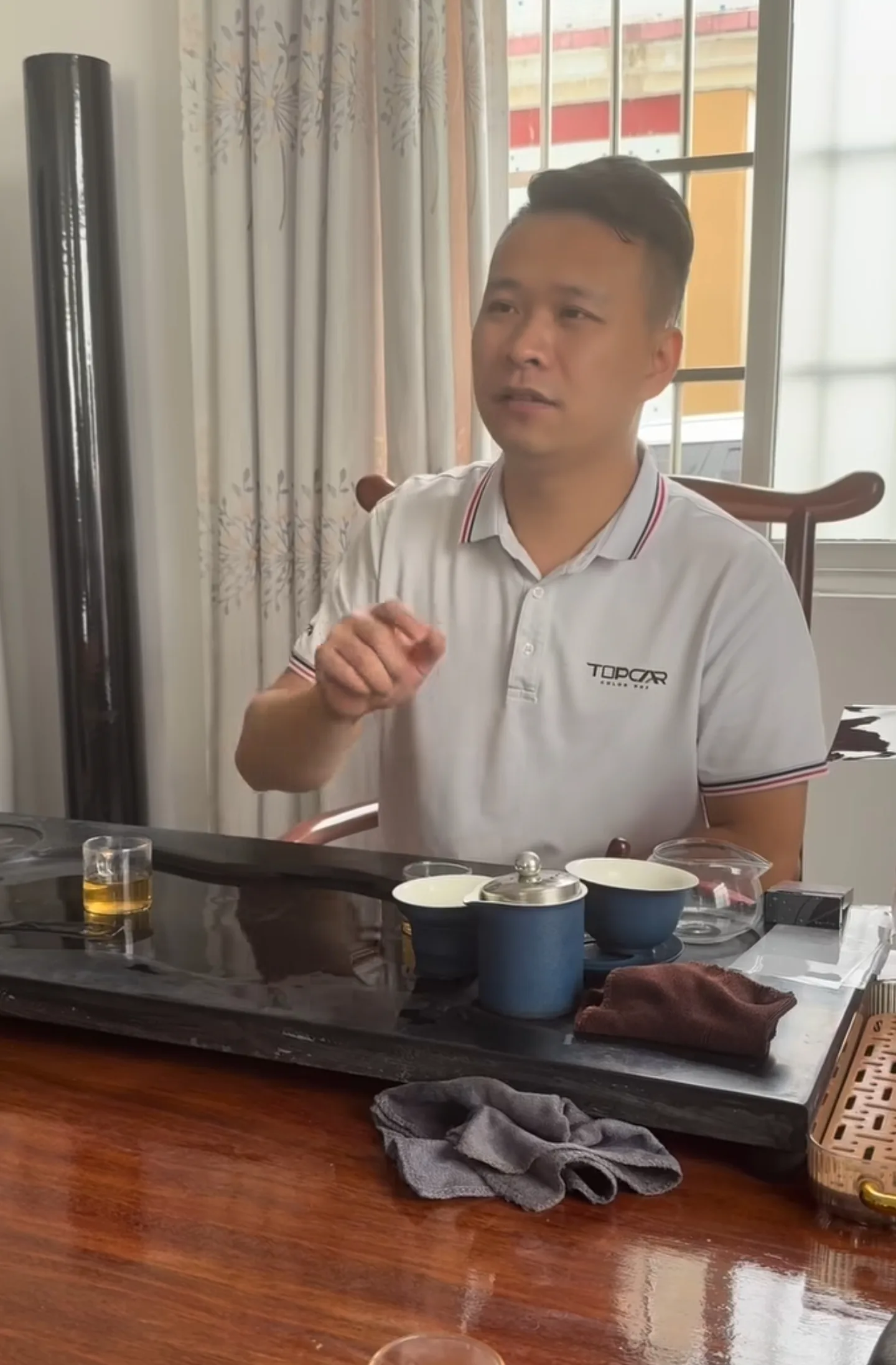
The conversation covered the technical specifications that most Nigerian wrap clients never hear about: film thickness ratings and how cast differs from calendered construction, adhesive chemistry and how it determines removability after years on a car, UV resistance specifications and what they mean in a high-sun environment like Lagos, heat tolerance data and at what temperature different film grades begin to degrade, and lifespan testing results from independent verification labs.
None of this information appears on a roll of vinyl or in a supplier's price list. It requires building the kind of industry relationship where a manufacturer representative will sit across a table and explain, in detail, what makes a premium film perform differently from a cheap one. Mohammed Lexus now has that knowledge, and it informs every material decision made in the workshop.
This is the kind of understanding that separates a workshop that wraps cars from one that truly understands wraps.
Inside the Factory: What Mohammed Lexus Saw
The Production Machines
The production lines inside the factory were running at full capacity during the visit. Machines producing pink and chrome film, holographic film, satin finishes: all running simultaneously at industrial scale.
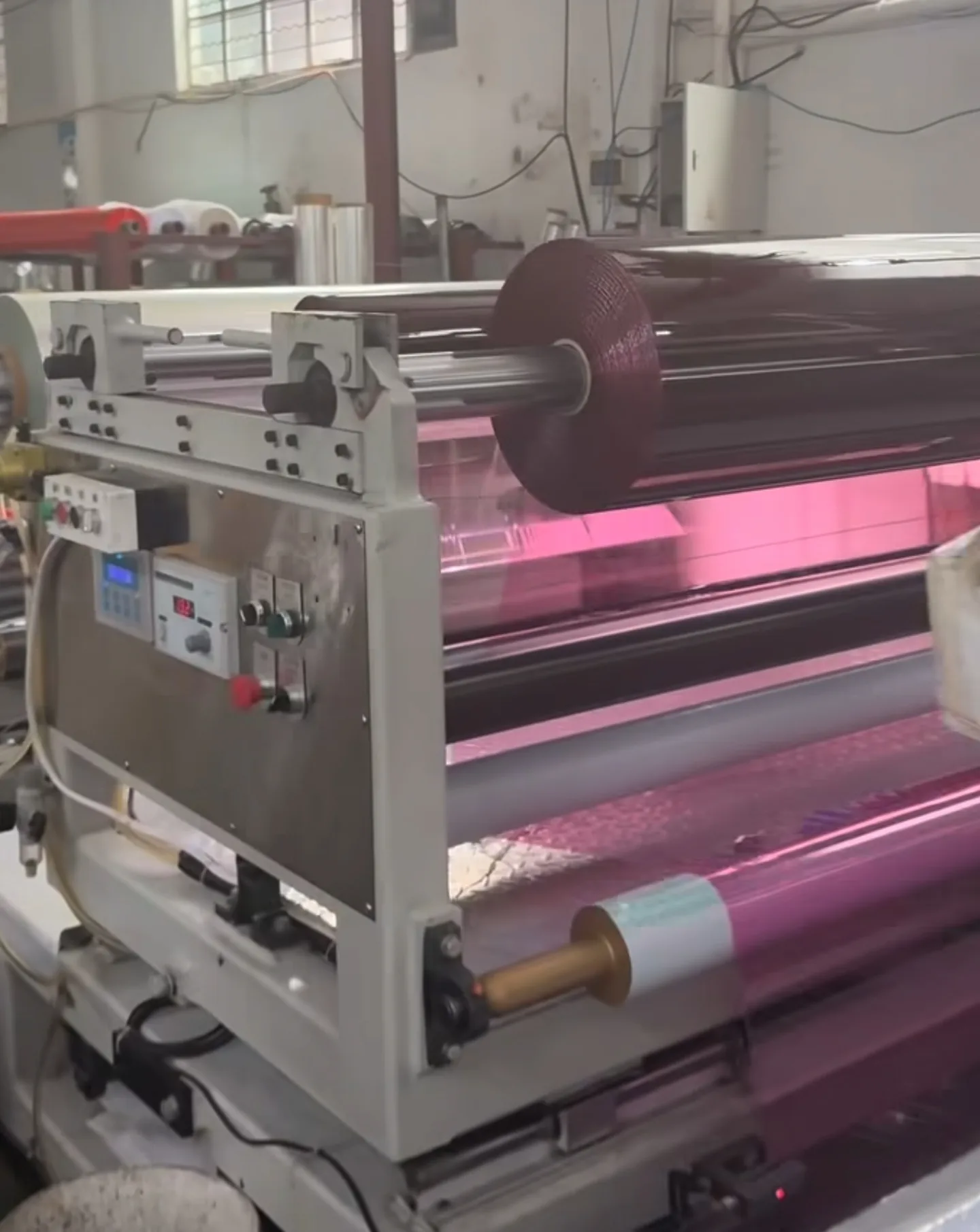
Each machine controls a precise set of variables: film thickness is maintained to a fraction of a millimetre across the full width of the roll, adhesive is applied with uniform chemistry from edge to edge, surface coating is deposited with consistent density, and the UV protective layer is applied in a controlled atmosphere. The output is measured, sampled, and tested before the roll is sealed.
A cheap vinyl machine does not have these controls. This is not speculation: it is the direct physical and economic reality of manufacturing at different price points. Without precision thickness control, the film will have variations that create bubbles, edges that lift, and surface finishing inconsistencies that become visible within the first few months on a car. Without engineered adhesive, the film either fails to hold in heat or bakes permanently onto the paint. Without UV protection, the colour fades on a schedule measured in seasons rather than years.
Seeing the machines in operation made this concrete in a way that reading a product data sheet never quite achieves.
The Warehouse
The warehouse attached to the production facility was stacked with rolls of vinyl in every colour and hanging sheets in every finish: chrome, holographic, matte, gloss, satin, colour-shift, custom printed. The full range of what the professional wrap market uses globally, stored in a controlled environment before distribution.
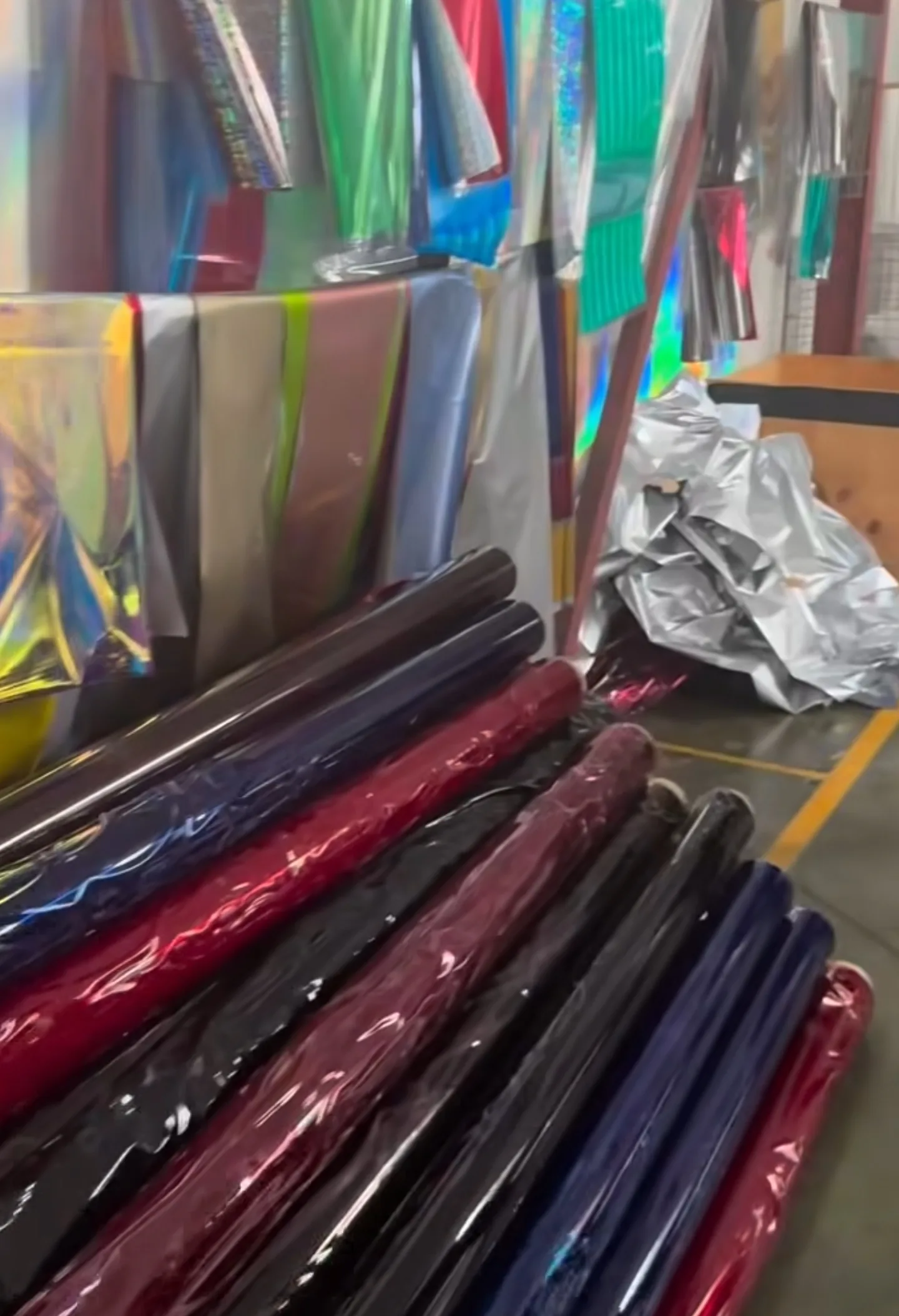
At this scale, you can see immediately that the raw material going into a premium 3M or Avery Dennison roll and the material going into a generic Lagos-market roll is not the same substrate. The difference is not in the colour or the pattern. It is in the base film, the adhesive layer, the liner paper, the coating chemistry, and the quality verification that determined whether that roll made it to the warehouse or was rejected.
What lands in Lagos at ₦8,000 per roll and what lands at ₦40,000 per roll are not the same product with a different label. They are manufactured differently, to different specifications, by machines running at different levels of precision. The warehouse visit made that visible in a way that no product brochure can replicate.
The Holographic Production Machine
One of the production lines running during the visit was dedicated to holographic film, one of the most technically complex film categories in the wrap market. Holographic vinyl produces its rainbow-spectrum light diffraction through an engineered surface structure where the film is processed to create microscopic channels that split white light into its component wavelengths.
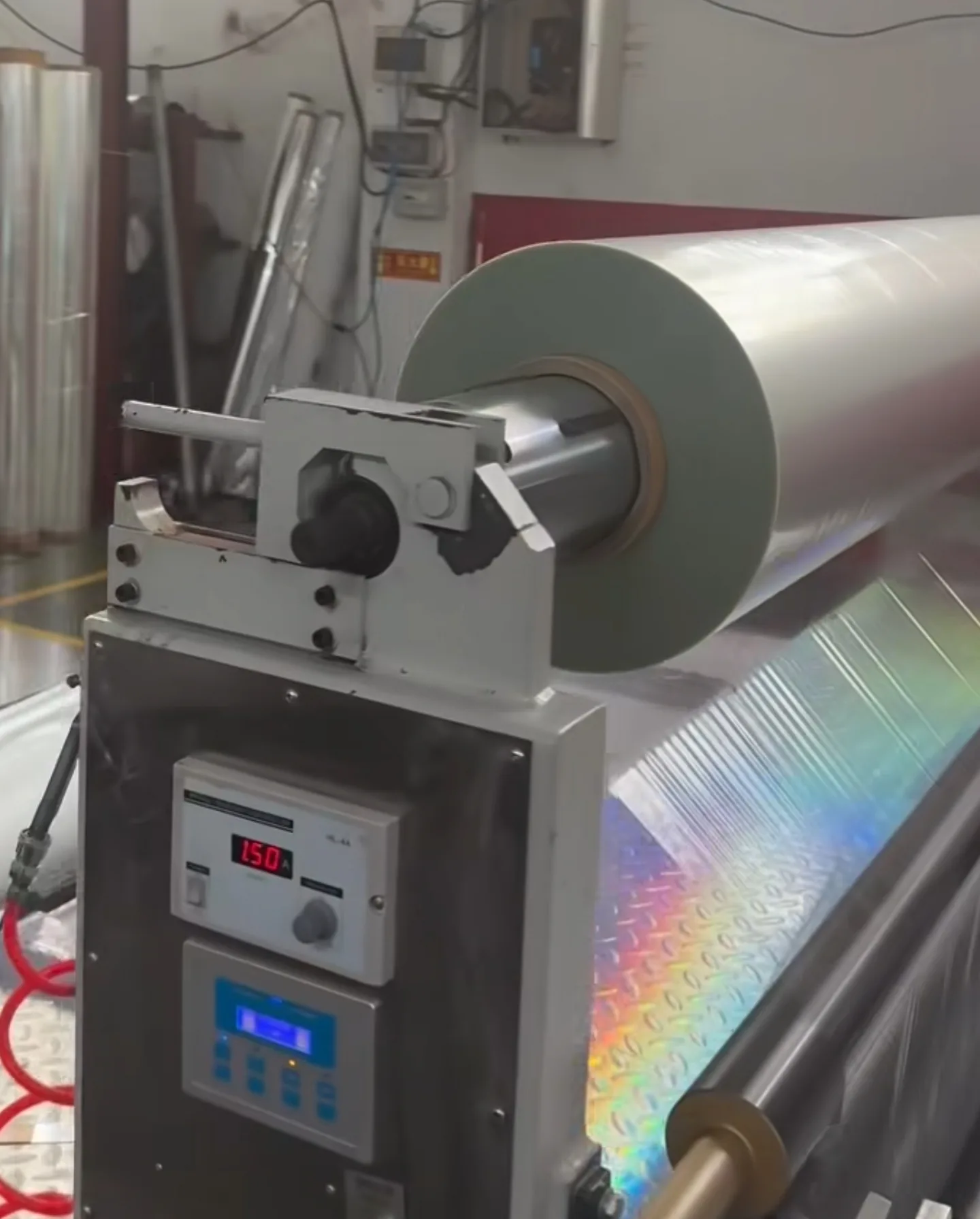
The digital control panel on the machine displays output parameters in real time: film speed, surface treatment intensity, quality measurements, and deviation alerts. The operator monitors these parameters continuously and adjusts the machine when any reading drifts outside specification.
The engineering required to produce holographic film consistently and to a quality standard that holds up on a car in Lagos heat is not achievable at budget price points. The machinery is too expensive, the process too precise, and the quality control too rigorous to be compatible with the economics of ₦8,000-per-roll film. When you see a cheap holographic wrap peeling at the edges or losing its effect within months, this is why.
Cast vs Calendered Vinyl: The Technical Difference That Matters
The most important technical distinction in the vinyl wrap market is between cast and calendered film. Both are vinyl. Both come in rolls. Both are applied to cars. The manufacturing process and the resulting performance characteristics are fundamentally different.
| Property | Cast Vinyl (3M, Avery Dennison) | Calendered Vinyl (generic, market film) |
|---|---|---|
| Thickness | 50-75 microns | 80-120 microns (thicker but stiffer) |
| Flexibility | Highly conformable to curves and recesses | Less flexible, prone to lifting at curved edges |
| UV resistance | Engineered UV stabilisers, rated 5-7 years | Minimal UV protection, fades in 12-24 months |
| Adhesive | Pressure-sensitive, rated for clean removal | Aggressive adhesive, bakes onto paint in heat |
| Heat performance | Stable to 80 degrees Celsius and above | Begins degrading at 50-60 degrees Celsius |
| Price per roll | Premium | Budget |
The heat tolerance row deserves particular attention for Nigerian car owners. Lagos ambient temperature regularly reaches 35 to 40 degrees Celsius during the dry season. A car parked in direct Lagos sun has a roof surface temperature well above ambient: studies on vehicle surfaces in tropical climates consistently show roof and bonnet temperatures reaching 60 to 75 degrees Celsius in direct midday sun.
Cheap calendered vinyl was not engineered for these conditions. Its degradation threshold begins at the same temperature your car reaches every day it is parked outside in Lagos. This is not a marginal difference. It is the physical reason cheap wraps fail in Nigeria on a schedule that never quite makes sense to first-time buyers who assumed vinyl is vinyl.
What Cheap Vinyl Looks Like in 12 Months in Lagos
The failure modes of budget vinyl in Lagos conditions follow a predictable pattern. Understanding them helps explain why professional wraps cost what they cost, and why the premium is not a workshop margin inflated by brand positioning.
Peeling at panel edges is usually the first visible failure. The adhesive bakes under Nigerian sun and then contracts and expands with the daily heat cycle. Edges and seams are where this stress concentrates first. Once an edge lifts, water and dust enter underneath and accelerate the separation across the panel.
Fading happens progressively, and often unevenly. Horizontal panels facing the sky directly receive more UV than vertical panels. A budget matte black wrap that looked uniform at installation will start showing patches within six to twelve months: the bonnet and roof lightening faster than the doors and rear quarter panels. The result looks neglected, even though the car has only been driven normally.
Cracking develops as the film loses flexibility. Cheap calendered film starts rigid and becomes more brittle with heat exposure over time. Curved panels, particularly rear arches and around door handles, develop micro-cracks that open further with each heat cycle.
Adhesive residue is the most damaging failure from a paint perspective. When a budget wrap fails and is removed, the adhesive left behind has often been chemically altered by months of heat. It no longer responds to standard removal solvents. Removing it without damaging the factory clear coat requires aggressive mechanical or chemical intervention, and in some cases, the clear coat comes away with it.
When Mohammed Lexus receives cars for rewraps, the preparation time required depends almost entirely on what film was used previously and how it has degraded. Budget film that has been on a Lagos car for two years can add hours to the prep process before new film can go on cleanly.
What This Means for Every Car Mohammed Lexus Wraps
Every roll of vinyl used at Mohammed Lexus is 3M or Avery Dennison. Not because those are the only brands on the market, but because Mohammed Lexus has seen the manufacturing facilities, met the manufacturer representatives, understands the product data sheets, and knows exactly what happens to other materials on Lagos cars over two to three years.
The China trip was not about finding cheaper suppliers. It was about building the knowledge base to make every material decision at the workshop level from a position of genuine understanding. When a client asks why a particular film was chosen for their car, the answer is not "because it is premium." The answer is specific: this grade, this thickness, this adhesive chemistry, this UV rating, for this vehicle, in this climate.
Mohammed Lexus now carries that knowledge into every consultation, every installation, and every follow-up conversation with clients about how their wrap is holding up.
Before booking any wrap in Lagos, ask specifically: "What brand of vinyl do you use and what is the product code?" The correct answer names a specific 3M or Avery Dennison product line. Any vague answer, any answer that names a brand you cannot verify on the 3M or Avery Dennison product catalogue, is a warning sign worth taking seriously.
The Real Cost of Getting This Wrong
The pricing reality in Lagos creates a tempting comparison. A budget wrap at ₦80,000 looks like savings against a professional wrap at ₦1.4M. On a single transaction basis, it appears to be a straightforward financial decision.
The comparison changes when you account for lifespan. A budget wrap that needs replacing every 12 to 18 months costs ₦80,000 to ₦120,000 per cycle, plus any paint remediation required between installs. Over five years, that is three to five replacement cycles. Against a single professional wrap using 3M or Avery Dennison film rated for five to seven years, the economics of the budget option are often worse, not better.
And that calculation still does not account for the variable that matters most: what happens to the factory paint underneath. A professional wrap using quality adhesive on a properly prepped surface leaves the original paint in the same condition it was found. A budget wrap with aggressive adhesive that bakes onto clear coat for 18 months in Lagos heat may require a full respray before the car can be re-wrapped cleanly. A respray on a luxury vehicle in Lagos starts at ₦800,000 and rises quickly depending on the car and the shop.
The cheap option, in practice, often ends up costing the most.
What the Factory Visit Changed
Mohammed Lexus left China with something that cannot be shipped back in a suitcase: direct, first-hand knowledge of how vinyl film is actually made, what the quality controls look like at the production level, and what specific engineering features separate a film rated for Lagos conditions from one that will fail within a year.
That knowledge now lives in every consultation at the workshop. When a client sits down to discuss a wrap job, the conversation is grounded in material science and real manufacturing experience, not just workshop habit or brand preference. The recommendation you receive from Mohammed Lexus about which film to use on your specific car is backed by the kind of factory-floor understanding that most workshops in Nigeria have never pursued.
Behind every clean finish you see on a car that has been wrapped at Mohammed Lexus is global-standard material, precision engineering, and real industry knowledge. That is what the China trip confirmed. And it is what comes with every job.
Ready to Wrap Your Car with Confidence?
Mohammed Lexus brings factory-floor knowledge to every wrap job in Lagos. The team works exclusively with 3M and Avery Dennison film, knows the product data sheets, and can tell you exactly what is going on your car and why.
Schedule a free consultation and assessment to discuss your vehicle, the finish you want, and the right material for the job. If you are not ready to visit in person yet, send photos of your car via WhatsApp to +234 813 275 1469 for an initial estimate.
For a full breakdown of what professional wraps cost in Lagos by vehicle type and finish, read the car wrap cost guide for Nigeria in 2026. It covers pricing for sedans, SUVs, exotic vehicles, and PPF, with real job examples.
A car wrapped with global-standard vinyl deserves an interior that reflects the same attention to quality. The Sport Style Racing Seat Headrest from the Mohammed Lexus store, at ₦150,000 with free Lagos delivery, is designed to the same premium standard you see in the workshop. It is the upgrade that completes the transformation inside the car.
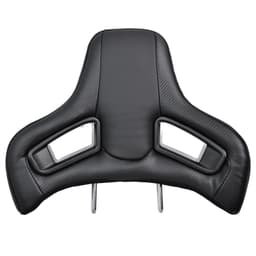
Sport Style Racing Seat Headrest
Premium quality with carbon texture panel
₦150,000
Shop Now →

You might also like
Get car upgrade tips in your inbox
Join car enthusiasts across Nigeria who get our best tips delivered weekly.
We respect your privacy. Unsubscribe anytime.